MEGA: Make Exchanges Great Again

A cultural exchange. A simple exchange between cultures. Some are formal and some are informal, but one thing that is certain is that they have been happening for a long time. Costa Rica Frika has been organizing them for nearly 10 years, however there are exchange programs that go back well over 50 years. When the first exchange was organized, we thought we were doing something unique. We were, to a certain extent, focusing on Costa Rica and high schools, but we’d joined an ecosystem that had to exist.

“Why tractors without violins?” This was a phrase coined by a famous Costa Rican president (the one who abolished the military). What he is saying is, what’s the point of working so hard to make advancements if we don’t take the time to enjoy life. There needs to be a balance between work and play and can’t just be all industry. That president did not coin the Costa Rica catchphrase “pura vida” (pure life), but it’s how it’s commonly described. Yes, we want to be advanced, but we’ll take our time getting there so we can enjoy life along the way.

An exchange in its simplest form is making room for the violins. Taking the time to chat with a friend, greet a neighbor etc. That’s part of the fabric of life and is why formal exchanges have prevailed for so long. Some of the longest annual exchanges have only ever been cancelled due to wars or pandemics. Ironically, instances where exchanges would be most needed to repair friendships, and get us off Netflix.

For our first exchange one of our selling points to travelers and hosts was the in person experience. You couldn’t just trust what you saw on the news or social media and make generalizations based on that. You needed it first hand. 10 years ago that was just one in a list of many benefits of participating in an exchange. Today though, I’d say that is the number one reason to participate in an exchange.

What we’re seeing is that not only is social media silo-ing us, it’s turned us off to the whole notion of needing/wanting to know more. Technology is so great that it’s really easy to isolate ourselves. I’ll be the first one to admit it. I remember a few years ago watching a video of an expedition to the North pole on my new 4k TV from my couch thinking how amazing it was that I could have this experience without having to lift a finger? They spent a month pushing a sled in extreme cold just to mark some point on the ice and I could enjoy that without any hardship.  

Obviously, this is an extreme example as there is no way I would ever do this and would much rather enjoy essentially a one hour highlight reel that cuts out all the boring stuff. Tech is so good though, I’m sure this enters my life even more than I realize. Instead of going out on the weekend, I might decline to stay home and go online. While I won’t go to the North pole, what if I decline a trip because I can just watch a video about it from the comfort of my home?

This trend is seen via the exchanges. Recruiting host families has always been the biggest task of organizing a group exchange as it requires multiple families to participate. It has always been a very popular exchange, however a non-pandemic related drop in participants was experienced last year, resulting in fewer students per school. What was surprising was that it still took just as long to recruit families. That was something unexpected and worrisome. Not so much in how it might affect future exchanges, but rather the future of humanity.  How much can a person truly isolate themselves and do they even realize it’s happening?

10 years ago this wasn’t even on our radar, but now it is and who knows what it will be like 10 years from now? Will we sleep 16 hours a day and only wake up to put on our VR headset to work, study and play?

Looking at the recent political activity and rhetoric in the United States only further motivates the push for travel and hosting exchanges.  Conflicts, tensions, and disasters flood the internet to grab everyone’s attention and push people apart while a face-to-face exchange has none of those motives. They’re not looking for “likes”. It’s a safe place that allows people to truly be people without the noise.

We took a latino friend to the US to visit a relative in January. We went ice fishing and had a great time and it didn’t matter one bit the Trump flag flying from their flagpole. He even took a picture with it. Not only was a friendship established, but that photo and story he’ll tell his friends and family back in Costa Rica will cause them to take a step back from their newsfeed.

There’s hope for the exchanges though. The day-to-day exchanges should last as long as humans do, however participating in a formal exchange should be a necessity as oftentimes it’s the only way to break out of our “silos” and invite the violins in.

Holy (Cow!) Week Traveling

In Costa Rica, Holy week is the spring break equivalent to the United States and Costa Ricans travel like crazy. It’s nearly the end of the dry season and Thursday and Friday are public holidays (thank you non-separation of church/state) so many look to get in that final rain free getaway. In my 10+ years living in Costa Rica I’ve only made the sin of trying to travel this week twice, and the second time was just complacency of forgetting how horrible the first experience was having been so long ago. 

If you attempt to travel the first or second weekends of Holy week you need to be very strategic. One hour trips turn into 4 hour trips and 4 hour trips just aren’t worth taking at reasonable hours. Last year, I had a ferry ticket for 12:30pm and left my house at 9am for the typical hour and a half drive, a little earlier than normal as I was expecting more traffic. I didn’t make it to the ferry till 4pm and by then the only ferry that had space wasn’t leaving till 8pm. 

It was absolutely nuts. We hit traffic just outside our city limits and at first we assumed there had been an accident. Traffic snailed along and we thought at each corner we’d see the wreck and traffic would open up. After a couple hours of this we realized it was just bumper-to-bumper for miles and miles. We ended up pulling off the road for the sake of our mental health. Even though I’m more of an “it’s more about the journey than the destination” type of person, this was over the top. 

parking in San Ramon
These are actual parked cars. Our situation was no different.

I struggle more in these situations as I’m accustomed to well-built highway systems, and just can’t believe how the roads here have not kept pace with the amount of cars that are on the road. That is my first stage of “road grief”. The second stage is when I start scolding myself for getting in this position in the first place. I seriously considered turning around and going home and had it not been for the more accustomed Costa Ricans I’m sure I would have.  

Fast forward a year and I was not making the same mistake twice. In a perfect world I’d just vacation on a different week, however our travel is limited due to school and jobs so I had to really plan for our trip. First off, never travel the entire week. We made plans to travel Saturday (gulp) and return on Wednesday to avoid the even larger crush of traffic Thursday to Sunday. Three months before, I secured our accommodations and a month before I bought ferry tickets. Thankfully, the ferry system sells some tickets online so you can arrive knowing you have a spot reserved. However, getting there on time is key. The earliest ferry departed at 5:30am and we were on the road by 2:30am.

There was very little traffic and my plan was going perfectly, so perfect I almost wanted to kick myself for not waiting till 3am to get a little extra rest. The only shock was pulling up to the ferry and seeing a massive line of cars. Apparently, I wasn’t the only one with this idea. Cars with their roofs packed with luggage, tents, canoes, bicycles etc. I think I even saw some people tailgating. The one big difference between me and them though was that I already had my spot reserved. These people were waiting in line in hopes that there would be enough space for them to get on the ferry. If not, they’d have to wait till 9am for the next one.

My heart briefly skipped a beat seeing the line, however we were able to drive to the front and were one of the first ones on the ferry. I was traveling with my 2 dogs and therefore I was able to stay in the vehicle with them. At 5:30am the weather was comfortable and refreshing and I had the best 1.5hr nap, windows down, fresh sea breeze, and the light waves lulled me right to sleep. It was actually the heat that awoke me from my slumber as the inferno starts almost as soon as sunrise is complete. 

From there everything was bearable. Roads from the ferry to our destination were still horribly inept to handle Holy week traffic. There was a bridge that collapsed over a dry creek bed and their solution was to close the bridge and just have everyone off-road through the creek bed.     

We were at our destination by 9am and pretty much zonked out all morning. That was the plan though. I’d much rather crash poolside in a hammock than be stuck in bumper-to-bumper traffic fully conscious. 

I was proud of myself for this careful calculation and outcome.  Every time a friend would message about the traffic they were in or the news would report on the miles long traffic jams, I’d just take a deep breath and try to sink deeper into the recliner or sofa, so glad to be able to enjoy a peak vacation period without all the traffic. We didn’t leave our destination till we returned home. All we did those days was pool, beach, food, nap, repeat. That’s all I’m willing to put myself up to for Holy week vacations. 

Most years, Holy week and spring break weeks aren’t the same, but traveler beware if they ever coincide. That’ll be the year I charter a helicopter from my backyard.

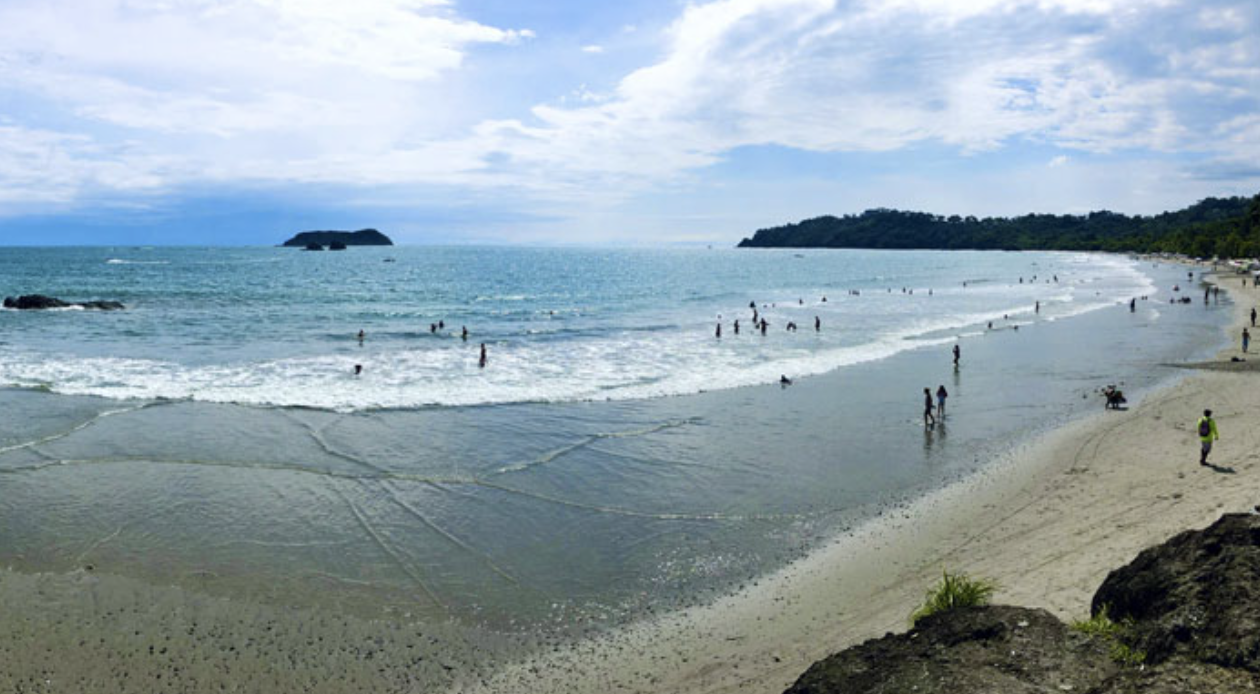
Sunny tropical beach
The lengths I’ll go to for this…

Soggy Weather Only Makes for Soggy Smiles

Since they began keeping records in the 1800s no hurricane has ever made landfall in Costa Rica. We came close a few years ago with one right at the tail end of hurricane season, but as of today we can boast of being a safe from hurricanes. That’s at least how I promote the country when organizing exchange groups.

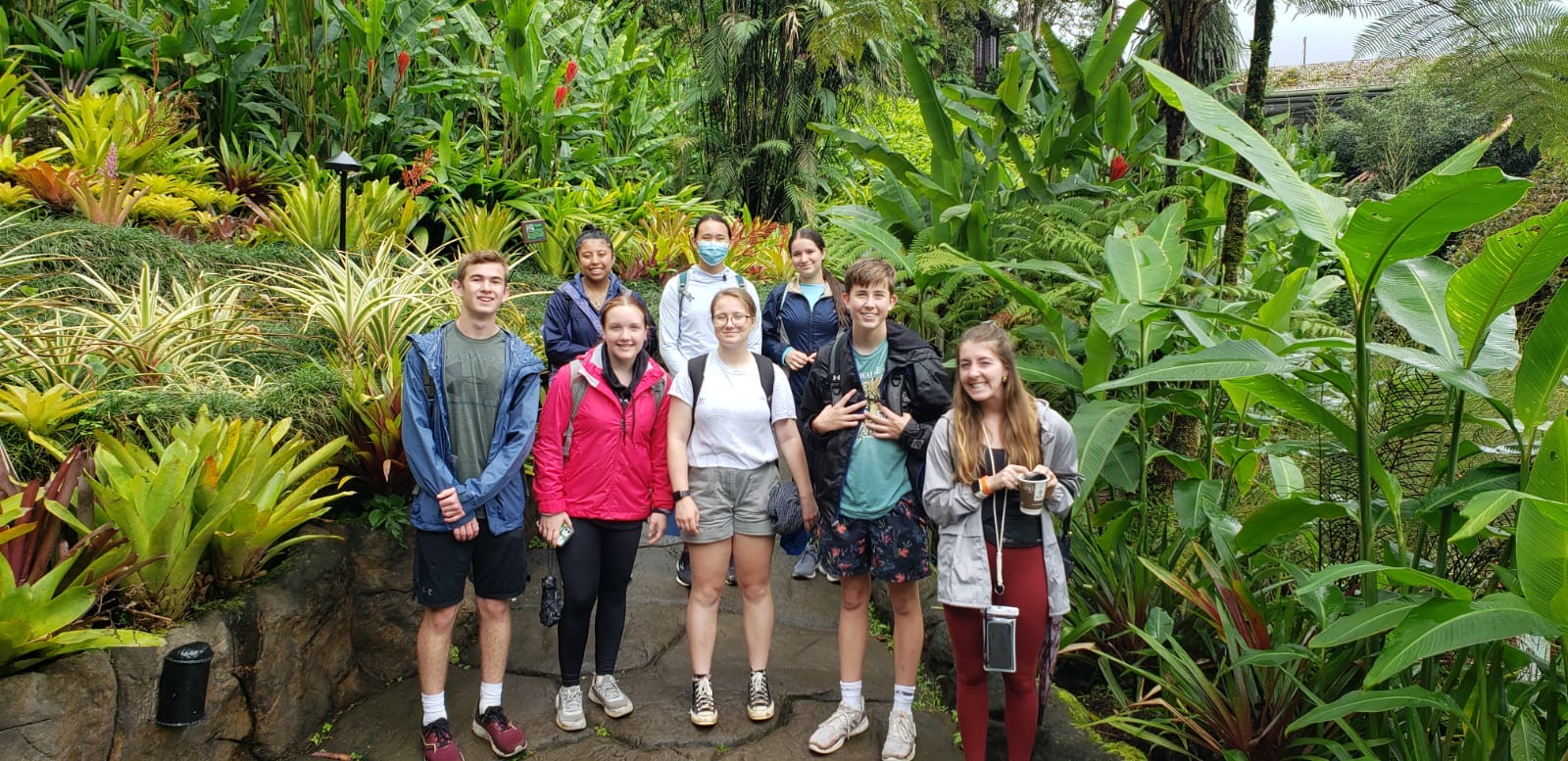
Recently, a group of high school students visited Costa Rican students for two weeks to really find out what the pura vida was all about. They had excursions, school visits and family outings all planned for the trip and everything started out true to form. No delays getting in, an excellent first day trip out to a tropical beach island, all followed by getting to their families and spending a day at the host school.

All was well as the following day we had a coffee tour in the morning and the weather couldn’t have been better. In the afternoon we went to the zip line canopy tour, where students would fly through the jungle on a cable. I had done it many times before and was excited for them as it was overcast and a bit foggy, which makes the experience even better.

I had sent them on their way and was just settling down with a cup of coffee to wait for them when I heard a tap. It was like a tap on a snare drum. Except it was coming from the roof and it’s the first sign it’s gonna rain. 99% of roofs are metal and not insulated so the rain is heard just as much as it’s felt. When it rains heavily it inhibits nearly all conversation, and forces you to turn on subtitles or crank the volume on anything you’re trying to watch.

Those taps became more frequent and eventually became a full fledged orchestra. I wonder how the group is doing out there? I already knew the answer (wet) and about an hour later it was confirmed as the downpour had not stopped. As they arrived off the last line the only thing that wasn’t rain soaked and drooping were the smiles on their faces. That’s the spirit, I thought. At least it’s not snowing (they were from Wisconsin).

What was a great adventure to end the day was only the beginning though. We got on the bus to head back to the host school, but it wasn’t long before we came to a standstill. Heavy rain from before caused a landslide and the road was blocked. Not a big deal in most countries, however in Costa Rica there is really only one road that connects places and detours are hours long. I was a little dejected, but once again the students didn’t seem distraught. Aside from some wet feet, spirits remained high. 

On our way to the detour, the roads were crowded and slow because of the rain. It was then that families began to send pictures and videos of bridges that had washed out and rivers that had flooded. 

At that moment, the host school wasn’t accessible as bridges on both sides had washed out or were closed in an abundance of caution till the rains subsided. Our chances were looking pretty bad and then were officially dashed when a landslide closed the detour we were on. Students wouldn’t make it back to their families that night. Luckily, I was able to find a nearby hotel for the group that night, got them fed, and their clothes dried.

Once the excitement/commotion of the day had died down I decided to turn on the news to see just what the heck had happened with all this rain. I expected them to lead with the rain, however they were looking 5-6 days out at a hurricane that would potentially make landfall in Costa Rica. 

5 years ago I would have sulked and spent multiple nights sleepless, however I could only smirk at this next challenge mother nature was throwing at us. Over the years, weather has added drama to the exchange experience and it sometimes feels like a long running TV series or saga like the Fast and Furious or Avengers movies. 

The most epic “battle” ever “fought” in our series was during the 2019 Wisconsin January exchange when a polar vortex stranded some students nearly a week before they were able to get back to Costa Rica. Next up was the pandemic that took us underground and now, it looked like a hurricane would be the next installment of the series, a first time exchange weather event on Costa Rican soil. 

The forecast projected landfall Friday evening and we were to expect heavy rain and winds for a 24 hour period. The amount of rain in that period was expected to be about a month’s worth of precipitation. Thankfully, we still had a few days to prepare and the next day we got everyone back to their families and managed to squeeze in another excursion before the weather got bad. 

The host school went remote the rest of the week, which unfortunately meant the cancellation of a school dance students were looking forward to and then all schools in Costa Rica were closed on Friday out of an abundance of precaution. 

As the days went by the anticipation grew. However, the storm began tracking north and it was now only expected to make landfall as a tropical storm. We were still on high alert and when Friday became Saturday, the vast majority of the country only received standard precipitation for this time of year. There were definitively rivers and towns that flooded, but in sparsely populated areas and not near the intensity as the last time we had a close call with a tropical storm. 

The exchange ended 4 days after the storm and besides getting to the airport a few hours earlier than normal to account for any colossal detours, the trip back uneventful. Still all smiles and the only upside down ones were from saying goodbye to their hosts. 

I was relieved as I thought our landslide and improvised hotel stay was only a preview of worse things to come, but ended up being a bonus and probably one of the highlights of the trip. The storm ended up making landfall in Nicaragua, which preserves Costa Rica’s status as never having a tropical storm/hurricane make landfall in the territory. 

With the changing planet, it’s likely that Costa Rica will one day have a hurricane make landfall, but it’s still way too soon to judge its visit-ability based on weather and as long as it snows in Wisconsin, the hurricane risk is well worth it.

Waterproof Exchange Students!

Hosting an Exchange Student is a Full Immersion Experience

Resilience. That’s the word that came to my mind when I sat down to write this. I was thinking back to where I was a year ago. The heart of the frustration phase of the pandemic. Where I’d been home so long that the novelty had worn off. Our organization had pivoted, but virtual everything was taking its toll, especially with our Wisconsin-Costa Rica exchanges. Instead of a hosting exchange, we implemented an ambitious virtual exchange only to realize we had out-sized expectations. As much as we hyped it, we ended up hitting a virtual wall where even the teachers agreed that it was overkill with everything else being digital.

Fast forward a year and while I wouldn’t say we are back in business, we are making strides. Jan/Feb hosting exchanges are returning and it’s a welcome stress of relief as I’d much rather be pitching the opportunity to host a student. Virtual exchanges have their place, however the face-to-face opportunity is incomparable.

cheesehead model
Let the sports indoctrination begin!

Hosting is a full family immersion experience. You are hosting, but you’re having an immersion experience just as much as the exchange student is. This time of year I’m in full host family recruitment mode and therefore talk with many families. The biggest concerns I get from families is not knowing what to do with exchange students on nights and weekends and that they think they are too busy to host. Those sound like valid concerns, however it has never stopped a family from hosting.

A lot of people don’t factor in that, for the visitors, EVERYTHING is new and will likely take them 3-5 times longer to do things. Could be due to a lack of understanding, uncertainty, or just plain shock/awe. The Costa Ricans are super observant and will point out differences that you’d have no idea existed. 

I’ll never forget the student that shared that his host family had a lower drawer freezer and an upper door refrigerator. It seemed so mundane, but the more I thought about it I realized I had never seen a lower door freezer/refrigerator in Costa Rica. Or the one that slept all night in his winter jacket because he didn’t realize he could sleep under the covers (in Costa Rica it is so hot that the comforter is decorative and people sleep on top of it with a light blanket at most). 

Those first few days going through the basics and discovering these inconspicuous differences fuels the host’s curiosity. This is when families get “cocky” and develop a “Oh you thought that was impressive, wait till I show you this…” attitude. This is also when they get “selfish”. 

tubing
Teens + Snow for the first time

The best quote I’ve ever heard about hosting was when a host mom told me that hosting “…forced her family to do fun winter activities”. When she realized everything was a new experience for their guest, she took advantage to relive old family experiences.  Sledding, ice skating, family game night etc. This mom “selfishly” leveraged the situation to bring her family together and do things they hadn’t done in years.

To families concerned about being busy, I say it’s impossible to be too busy for an exchange student and in all honesty the busier the better. The families that have 4-5 kids of their own and offer to host multiple students are special. I can only imagine the stimuli overload an exchange student would have and how much they’d learn from the experience.  

Since every experience is new, it doesn’t matter how mundane or boring the activity might seem, for them it will be captivating. Students have gone to practices, games, tournaments and attended club meetings. Running errands is special as they are the best car riding companions. So many things to observe and take in. How are people driving? How do they drive in the snow? What music is on the radio? I’ll never forget when I took my wife on the interstate for the first time and passed a car going uphill. She didn’t realize it was a passing lane and thought a car would come over the hill and hit us head on. 

Just because these experiences are completely new for them, doesn’t mean they won’t be able to relate. The culture is different, but not earth shattering and have a lot of similarities. We’re not comparing smartphones to rotary phones, but rather Coke to Pepsi or the Vikings to the Bears. Playing sports/video games, listening to music, eating (a lot), sleeping in etc. describe teenagers no matter what country you are in.

One year later, our patience is paying off and I’m now more excited than ever to bring students and families together. Exchange programs are some of the oldest and most resilient programs in the world. It literally takes a pandemic to shutter them, and even then virtual options still exist. This winter’s exchange will be extra special for families/students and it will be one that I’ll always remember because of the road taken to get there.  

If your family would like to host a student or teacher for 2 weeks in the Muskego/Mukwonago area Jan 13-27 contact dustin@costaricafrika.com or visit bit.ly/hostingexchange

Looking Back on How a Travel Experience Became a Permanent Lifestyle Change

There’s an exclusive club I belong to in Costa Rica. It’s the club for ones that have come to Costa Rica, had an amazing experience and followed through on their promise to return. So many people exchange, volunteer and immerse themselves in a foreign country as a GAP year or a once in a lifetime experience, but few ever make it back to visit and even fewer make the experience a permanent part of their life like I have.

At the end of my first experience in Costa Rica, I was enthralled. I had lived with a wonderful family and made many friends in town. As my stay was coming to an end I started telling everyone how I would definitely be back to visit. Most were supportive of my statement, but they also let me know that that is what all the previous volunteers had said too, but had never returned.

I did end up being an exception to that statement, but looking back on those conversations from 15 years ago and having seen countless students and volunteers come and go to never return, it hits me how hard you live the experience in the moment. An immersion experience ties you so much to the local culture that you never imagine yourself giving it up completely, especially with communication being so easy nowadays.

The other day I was visiting a host family from my first experience in Costa Rica. They always remind me of my inaugural experience. How I fumbled my words, who I had a crush on, and how I couldn’t hold Costa Rican moonshine. They reminded me that on Fridays I would get a bus out into the country, get off, and then walk an hour just to get to their home and be able to hang out with them for the weekend. I was behaving and acting like any other 20-something year old Costa Rican that went to the city to work/study and then returned home each weekend to visit.

volunteer with family
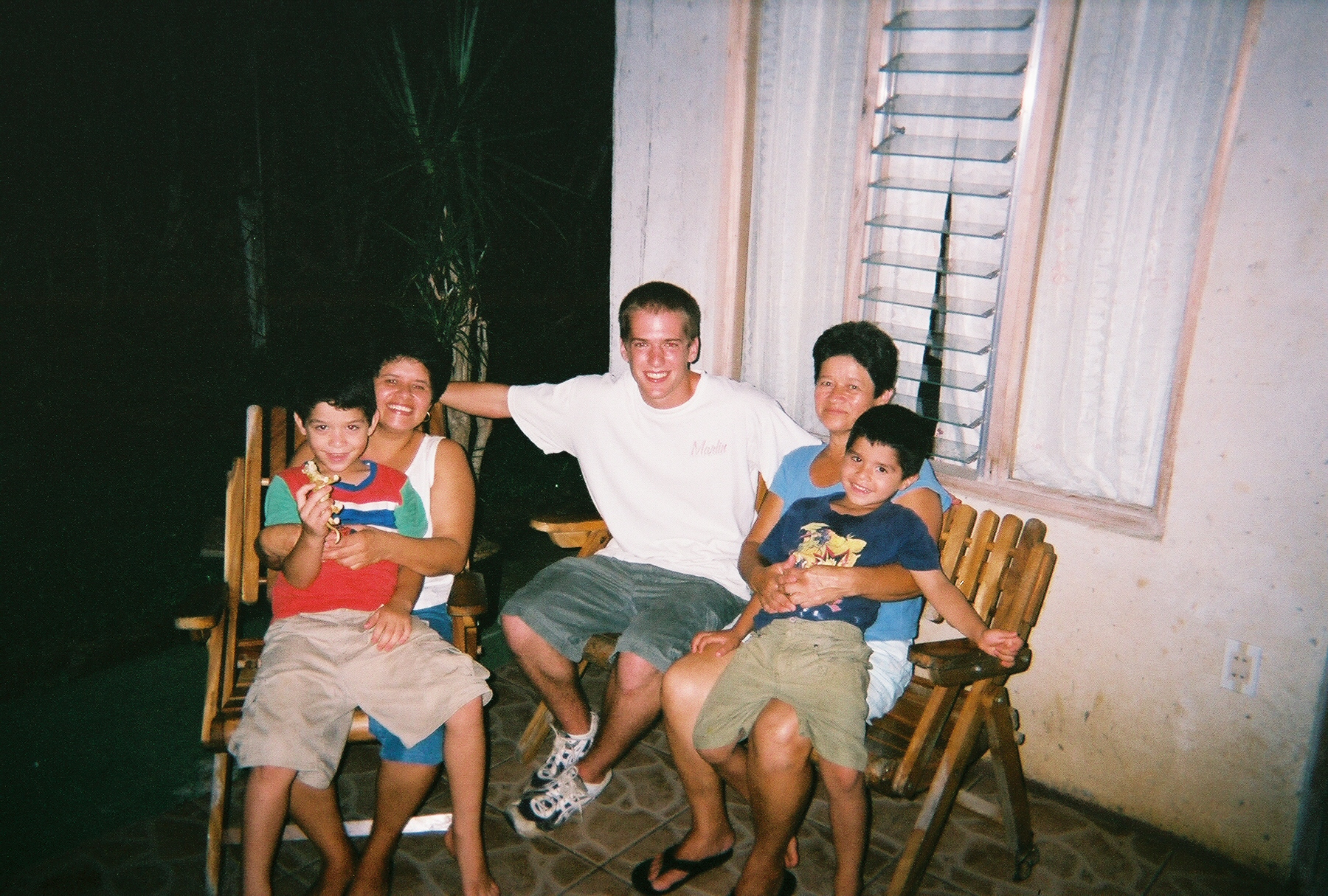
One of my first families I met in CR

I was living the experience and keeping my word. At some point though, I stopped doing those things as work, life, and other responsibilities began to take up my time, however I do remember it dawning on me when my normal changed. It went from always spending a night or two with them, to day visits and now I have to make it a special event to get out to visit them. It was a bit sad, but others have moved on too. My family’s children, who I met when they were teens, now send me wedding and baby shower invites. People I met with dark hair, now have gray hair and the moonshine now tastes like sh*t (or maybe it always did?)

Now, my family looks at me differently too. I still get the “you’re so skinny” and the blue eyes remarks, but my cultural innocence is gone and more often than not I’m asked about things that previously I’d be unqualified to speak to. Now we swap information on places to visit, apps to download, cars to buy and even the occasional investment opportunity. I can even debate the best way to drink coffee, which I only started drinking a few years ago and completely amazes them as they remember me as the guy they’d always have to make juice for when everyone else would drink coffee.

If there is one thing they have instilled in me though, is the sense of paying it forward. They’ve been so kind to me over the years and it is always a battle to return their favors, but I recognize that I’m now in their position when I receive travelers. I think I do a good job as it’s not uncommon for me to have to dry tears at the airport and say everything is going to be OK while they are wailing and swearing they’ll be back as soon as possible. It breaks their heart, but brings satisfaction to me knowing they had a great experience.

While I did prove all the naysayers wrong, it is truly a difficult experience to end which is why I feel blessed that I can still enjoy it to this day. It is natural for relationships to change as other commitments and opportunities come into our lives, but those that are young and dedicated have as much of an opportunity to join the club as I did. And last I checked, anyone is allowed to join. Just don’t encroach on my turf 😉

Without A Routine, Time Stands Still in The Tropics

It’s hard to believe that it’s been almost a year since I was last in Wisconsin. With the pandemic either shutting down international travel or requiring so many restrictions to discourage any non-essential travel, I find myself remembering the little things that I took for granted being able to travel home as needed. One thing that was nice was that the weather could give you a good idea as to what the season/month was. If you awoke from a coma and had no idea what season it was you could just look out the window to get a good idea.  That’s not really the case in Costa Rica though.

When people ask me why I like Costa Rica so much, one of my first responses is the weather and, in particular, not having to deal with winter. Where else can you get low 80s and sun every day on planet earth? Growing up in midwest there was always a point during the winter where I would literally lose my cool and say “This is enough, I can’t take the cold/snow/ice etc anymore. Get me out of here!”

There wasn’t much I could do about it until I got to college and decided to take spring semester off to go somewhere warm. Well, it was actually to immerse myself in a Spanish speaking country, but I’d be crazy to not have taken advantage and gone to a tropical Spanish speaking country.

After escaping that first winter, and prior to permanently moving to Costa Rica, I always got creative to come up with some kind of excuse to get me out of the midwest at the most atrocious time of year. I could never quite escape the whole winter though.  My breaking point came after going to Costa Rica for two weeks in January, only to return to negative temps and frozen pipes.  

After making the move and getting into a routine, things were perfect. Now, I only had to deal with rain or no rain for weather forecasts.  Instead of using the weather to help remind me what season/month it was, my work schedule dedicated it. I knew summer was coming because an exchange group was set to arrive. I knew it was fall because I would be in the US visiting schools or attending conferences and I knew winter was here when every week I’d be at the airport to pick up travelers that were as white as the snow from where they came from. That all changed with COVID though.

Costa Rica Frika was hit pretty hard and fast with all the lockdowns and I lost nearly my whole routine. I didn’t notice it right away, but I also lost my internal compass. My work was no longer able to keep me up to date. With the weather as consistent as it is, it was getting hard to tell what month we were in, what day it was, and even if it was a weekday or weekend. Everyday felt the same. 

This year, I spent the whole month of January in Costa Rica for the first time in 5 years. One day, I got a message from a teacher saying today would have been the day they would have arrived for their yearly trip to Costa Rica. When I got the message, I had to open my calendar as I really didn’t believe that it was actually that date. Normally, we’d be going crazy getting ready for them. The lack of activity and routine just didn’t match up with what we were reminiscing about. 

Usually, I’m freezing my butt off in Wisconsin for a few weeks in January, but this year I hung a hammock out on my deck for afternoon siestas and if it weren’t for my editor reminding me to write this article I probably would have forgotten about it. Heck, if he hadn’t mentioned how bitterly cold it was, I probably would have written about something else.

I’m sure I’m not the only one this has happened to as the pandemic has rearranged a lot of people’s routines. I’m also not complaining about not having the change of the seasons to keep up to date. I’ll take that minor inconvenience to avoid the cold. 

Due to this realization, I’m incorporating other methods to help me remember seasons and months. I’ll watch football in December to see the snow and remind me it is winter. Whenever the Costa Rican weatherperson says we’ll be getting a cold thrust (their words, not mine) I’ll know it’s Jan/Feb. Likewise, if they mention tropical waves then I’ll know it is at least June. To keep up with the days of the week, I’ll just listen for the garbage truck to come by and then I’ll know it is either Tuesday or Friday. 

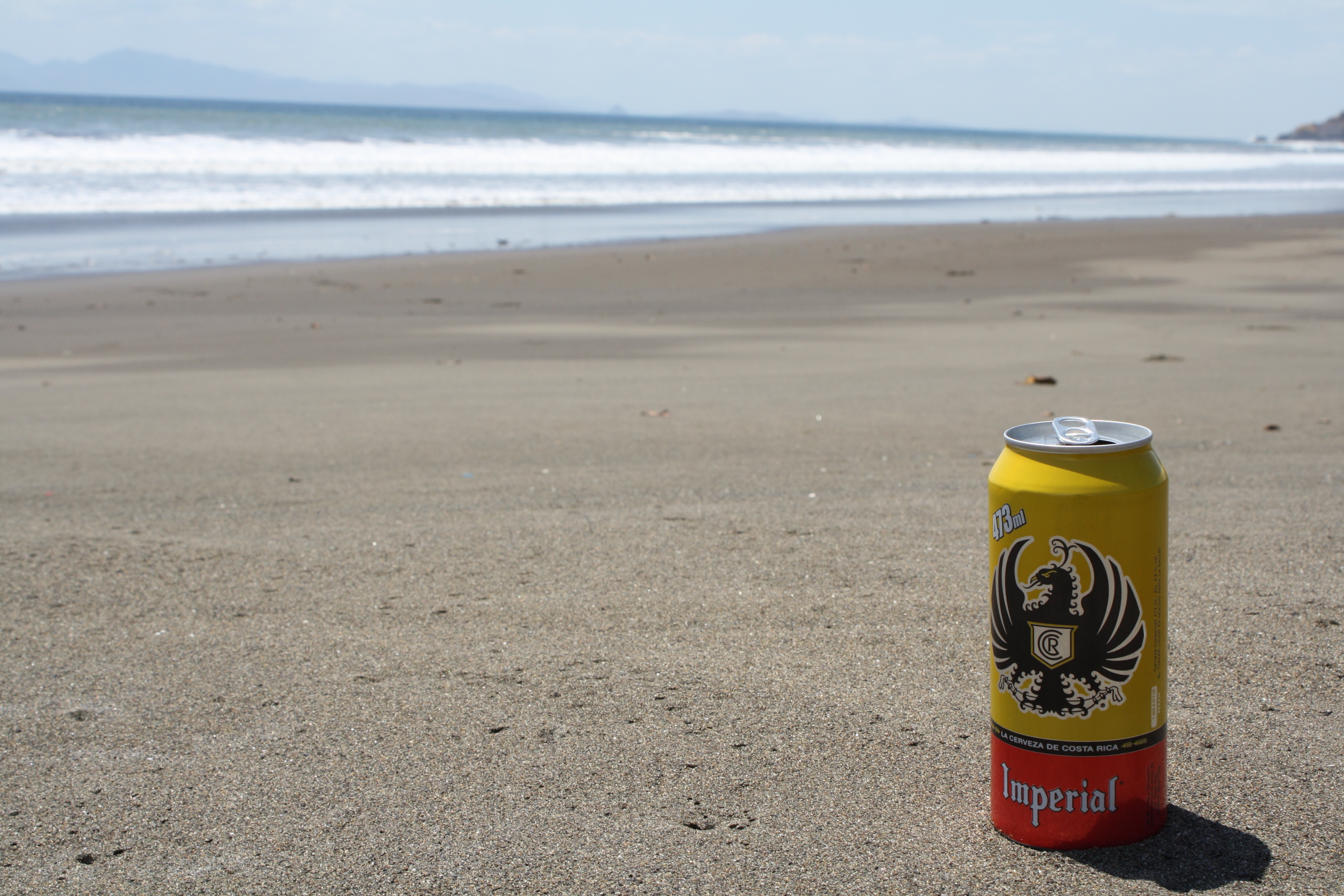
Those cues should be enough to get me through until the routine picks up again. To be fair though, I should treat those two week January trips to visit family and friends back home like I used to treat my two week escapes to Costa Rica. Windburn for sunburn, snowblowing for lawn mowing and of course, Spotted Cow for Imperial. 

What’s fair…
Imperial on beach.
… is fair.

Still Searching for Pandemic Bottom

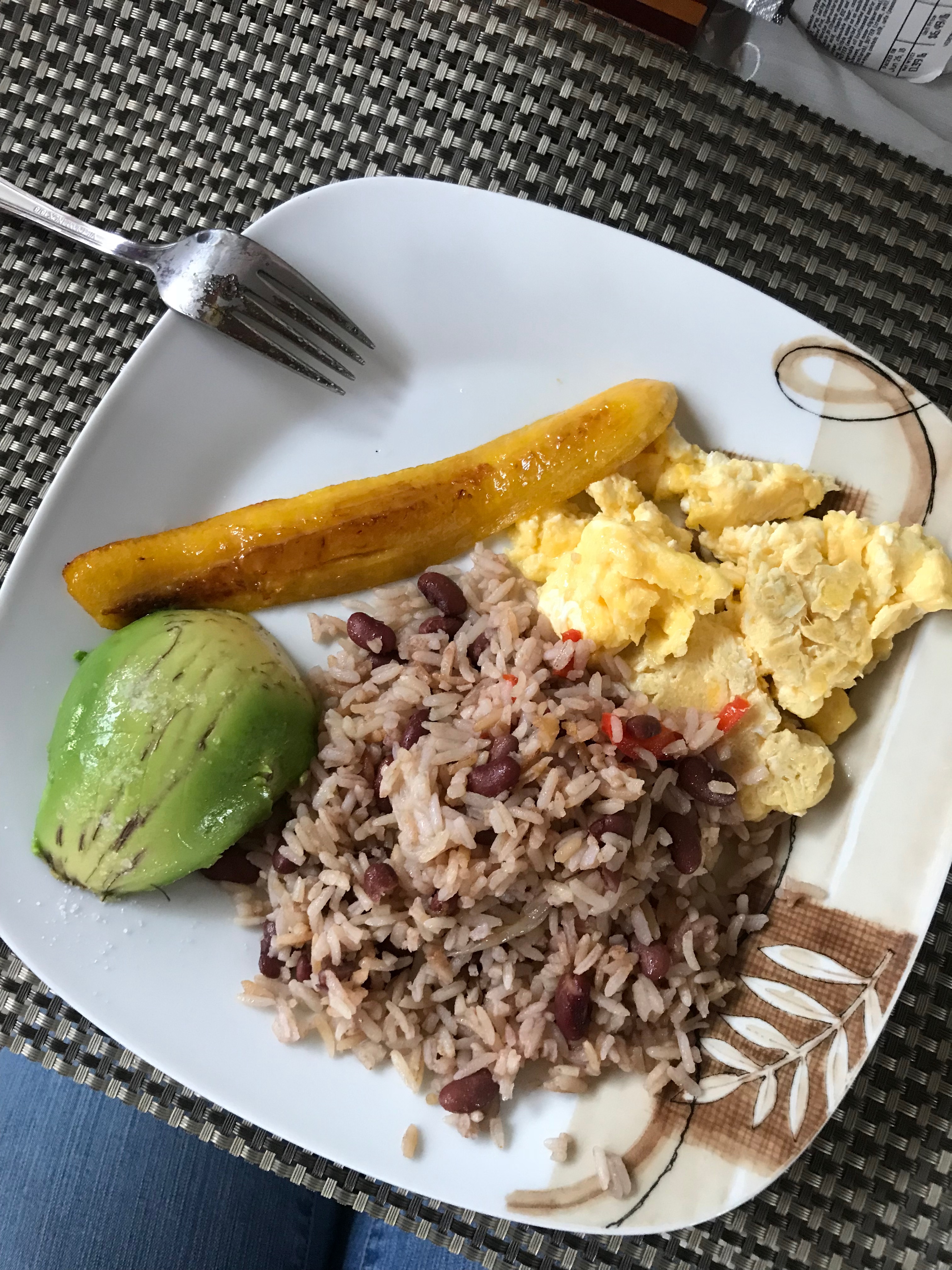
Normally, I write about once every two months, but for my last deadline I asked for an extension because I was anticipating news: My first traveler since every tourist up and left Costa Rica in March would be arriving. After seven months of lockdowns, quarantines, partial reopenings and mask mandates, this had to be the turning point. Boy, was I excited to get in the car to battle traffic and airport parking to greet our visitor. I couldn’t wait to be face to face again with someone who had never eaten rice and beans for breakfast.

Costa Rica breakfast
Breakfast of Champions!

For as much as I tried to psych myself up for this moment, it was hard to ignore just how severe the downturn had been. The airport, which used to handle up to 12 inbound flights an hour, only had three arrivals the whole day. It was a ghost town. 

This visitor was a volunteer going to our animal rescue center, one that I had taken countless volunteers to before the pandemic. Pre-pandemic, the site often was bustling with 50 or more volunteers, but this time there were fewer than 10. The volunteer also happened to arrive on the same day the country recorded its highest ever COVID19 case count, likely because of government loosened restrictions a few weeks ago.

I think we have reached a point where the psychological and economic effects are doing more harm than good. I naturally enjoy being at home, but I know I’m in the minority, and even I’m starting to get on edge.

Psychologically, it’s frustrating that there is no end date to this pandemic. Countless times I’ve geared up for an end date only for it to get extended. I’d go through all the emotions to open up and then suffer disappointment.

And the more I get entrenched in my routine, the more I find it hard to add even little things to my calendar. Even simple things, like calling my parents. 

I have more free time than at any point in my adult life, but I find that I forget or put off things because it might interrupt, like, my Netflix schedule. Besides, without anything going on in our personal lives, there’s not much to say.

Now, the crisis is economic. Every day more and more people and organizations are asking for help. Heck, even the government is asking for help.

Costa Rica is not like the United States, where it can just print itself out of a problem and add it to the deficit. If Costa Rica were to do that, there’d just be massive inflation. 

A few months ago, the government went to the International Monetary Fund, a big international bank that loans to countries, and asked for a loan just to cover interest on its current debt. Now, it is going back to the IMF for new money to get through the pandemic and refinance old debt.

It seems sensible, but you have to be really careful how you approach an IMF conversation with Costa Ricans. It’s like talking politics in the United States – you’re either going to find someone who really agrees with you or really doesn’t. There’s not a whole lot of middle ground, and it doesn’t take much for tempers to flare.

If you’re anti IMF, it’s because they will require the government to implement austerity measures to pay back the debt and we end up like Greece. If you’re pro IMF, then you are probably upper class and/or work for a large corporation. 

The majority of large corporations don’t pay income taxes, as they are located in tax-free zones, or they implement tax strategies to pay none. What irks the majority of Costa Ricans is the proposal that the government is sending to the IMF imposes additional taxes on everyone, except for… wait for it… yeah, large corporations.

This is where I tune out.  A few years ago there was a near six-month general strike as tax reforms were put in place to reduce the deficit. Everyone had to tighten their belt except… large corporations. Sigh. Here we go again.  

It’s not that I don’t care, but it’s frustrating to think that something will be pushed on us when there could be better negotiating and maybe even an option that doesn’t involve the IMF.  They interviewed an economist on the news the other day, who at one point suggested ending the interview so he wouldn’t start crying on live TV. 

I don’t think he was joking. I’ve felt the same.    

I wasn’t expecting a V-shape recovery to begin with the arrival of this visitor, but the excitement was certainly dampened by the worsening economic situation and rise in cases.

Hindsight will be 20/20, but I think it’s pretty safe to say we haven’t hit bottom yet. Maybe next month will be better.  

As I prepare for the next visitor, I’m already thinking of ways to psych myself up for this turning point. 

Better Preparation Handles Mother Nature’s Curveball 

A year ago, I wrote about living through the polar vortex with 80 Costa Ricans in Wisconsin on a high school exchange.

It culminated in our return flight being canceled, which didn’t bother our visitors but created a horror show for me trying to rebook everyone.

So this year, after a white Halloween and a green Christmas and with twice as many people, we had to be ready for anything.  It’s a good thing we were, because misfortune would be after us again.

We had set up flights to Chicago on back-to-back days, and our Day 1 flights went fine. The next day, the first group would tour Chicago and then travel to Wisconsin along with the Day 2 Chicago flight arrivals.

I was the caboose on the Day 2 flights, connecting in Houston. Our other Day 2 flight was a direct flight that left just before ours. All was well until I started getting messages right before boarding about a snowstorm moving into the Wisconsin-Chicago area that evening.  I didn’t get a chance to check the weather before service cut out, but as soon as we hit U.S. airspace, I was able to watch The Weather Channel’s live report on the storm on in-flight TV.

Chicago looked bad.

I checked the direct flight’s progress, and it was looking good until about 30 minutes outside of Chicago. That’s when the flight path took a sharp right – and was now headed for Cleveland.

Oh man, here we go again.

I got all this information before touching down in Houston, so I was ready to hit the ground running. But we had less than two hours to clear customs and get to our next gate with 40 teens and teachers, half of whom had zero experience in making a connection like this.

Lucky for me, I had my smartphone, which would prove to be life-saving in so many ways.  We were stuck in line at customs for almost an hour, which would have been torture in most cases, but knowing my group was unable to wander off, I got to work fixing issues.

One of the first messages I received was from one of the host schools saying not to send the bus to the high school because they had cancelled all after-school activities. It must have been sent when I was without service, as it was really too late to do anything based on where the bus was at that point.

winter students on bus
Ready or not, here we come!

I quickly called another high school that was also receiving a group from the same bus. I explained the situation, and those families agreed to each take in an extra student for the night until the weather improved.

Awesome!

So I had them taken care of, with a second bus en route from Chicago to Madison making stops along the way. Other than that bus being about two hours behind schedule because of the weather, everything was good.

I had no means of getting a hold of anyone on the flight that was now headed to Cleveland and just had to watch for updates from the airline.

The customs line was really long, and on top of that they took two of our students aside for further questioning. So we were still advancing when it was announced that our flight would be delayed 12 hours, until the following morning.

That was stressful news for the teachers and Costa Rican parents to take, as they were already on edge, being only day one away from their children. For me, this was just another sigh of relief and the students… they were the least stressed in the matter.

students sleeping at airport
Airport sleepover!

We would have been crunched to make the connection even with what initially had been a one-hour delay, and these delays were much better than the cancellation last year.  I’d gladly spend the night at the airport as I couldn’t fathom rebooking 40 people on a smartphone.  In the end, we got to Chicago the next morning, almost the same time as the Cleveland “direct” flight.

I couldn’t help but think this was a leftover gut punch Mother Nature didn’t get a chance to unload on me last year. There hadn’t been any winter this year until I decided to fly.

But it could have been a lot worse.

I think of all the little things – like having upgraded my phone in October, having a SIM card ready to go upon U.S. arrival unlike prior years, having the inflight weather/flight status and flying a Big 3 airline rather than their hubs.

I had families ready for deployment at a moment’s notice, so much so that the ones ready to take in an extra student for a night never got the chance. Once word spread, the families from the first school drove to the other school and met their students there.

After the exciting arrival, the weather went back to being dormant and didn’t play a factor the rest of the exchange.

I definitely deserved that; I just hope I didn’t use up all my good weather credit for next year.

students being welcomed
They made it!

UPDATE JULY 22ND: While the weather was great for exchanging in January, the pandemic has completely shut us down.  Thankfully nothing happened mid-exchange, but we’ll be on the shelf till at least summer 2021 and won’t return to Wisconsin till January 2022.  By then we’ll be well rested and excited for anything that comes our way.

Life in Corona Rica

March 11th.  That’s my date.  That’s when it became real.  I wasn’t even in Costa Rica, but the NBA postponing their season was the tipping point for me.  Three days before I had been telling my volunteers and exchange students not to worry about the situation and that worst case scenario Costa Rica might close schools for a few weeks.  I told them that Costa Rica lives from tourism and closing the airport would be a doomsday scenario and would be a last resort. Little did I know that would be the last face-to-face contact I would have with them.

Within 10 days of that conversation I had traveled to the US and all those doomsday scenarios had come true.  Programs were halted and all my participants were on planes back home. I was still scheduled to be in the United States another week yet, however with the speed that things were moving I couldn’t risk borders closing or cancelled flights.

I decided to shorten my trip by 5 days, and return the day after Costa Rica closed its borders to foreigners.  I have residency so I wasn’t affected and after hearing about the 8hr immigration lines when they closed Europe, I thought better to avoid any panic traveling.

My biggest fear was getting stuck in the middle of my trip, unable to make a connection due to a border or airline closing.  I had one connection to make in Panama and I had no idea what I’d be arriving to in Costa Rica as so much had changed in 10 days.  Feelings ranged from ho-hum, all the way to giving my wife a big defeatist hug, like Tony Stark when he returned to Earth in Endgame.  So much had changed in such little time.

It all started in immigration.  I was promptly served a sanitation order to quarantine for 14 days at home under the threat of jail time.  It was advised that I not even stop at the supermarket to pick up food on the way home as the order was already active. When I got into town, physically, San Ramon hadn’t changed, but my perspective had.  While my programs screeched to a halt, the rest of Costa Rica hadn’t come to a standstill. It didn’t matter though. My brain was set to doomsday mode. I went for a walk that afternoon in the field behind my house and it was eerie.  Doomsday mode opened my senses to everything going on around me. Every rustle in the grass, every sound from the birds was washing over me as the new normal. These were the same sounds I heard every time I went for a walk but this time the atmosphere just felt different.  Lifeless, abandoned, or even post-apocalyptic.

sign at park
#Istayhome For the good of all San Ramonians

I’d spend 14 uneventful days processing all of this.  Most days I’d try to figure out what movie/show I was living in real life.  If I was ever at a loss, I’d just fire up Netflix and look for something to compare my situation to.  Luckily, the quarantine was not a huge sacrifice for me. I was not infected (as far as I know) with the corona virus and experienced no symptoms.  My wife was able to go to the store for me and I had no one to care for outside my dogs.

After completing the quarantine I decided to venture out to see what I had missed.  14 days is nothing in corona virus time and San Ramon was all but on lock down. Everything had closed except essential services and there was a car curfew in place.  Places that were open restricted entry and enforced a 6ft radius. Going to the supermarket I didn’t see many things out of stock, except for some cheese. Lines were longer than usual and clerks were wearing masks.

exercise bikes with caution tap
Not happening…

Wow, how things had changed though.  I was now living what I’d seen on the news the last few weeks, but not all was lost.  Social distancing, safer at home, and lock downs have all been promoted/enforced throughout the world during the pandemic.  The message’s intensity has been consistent in most countries, however there has been differences in its effectiveness across countries.

Costa Rica I’d say has done remarkably well in its efforts to control the spread to this point.  While it’s really hard to say why they’ve done well, there are a few noteworthy exceptions in comparison to harder hit countries.

In the month since our first recorded case, growth has been very consistent at 20-30 a day.  There haven’t been medical supply shortages and the government recently opened a new hospital that only receives corona virus patients.  They have 88 beds and at its opening there were only 10 people hospitalized for the virus in the whole country.

It was painful to shut the borders and tourism is going through a never before seen “zero season” as in $0 revenue.  There have been some rescue packages put together and the public healthcare system has slashed premiums 75% for the next three months.  There’s even talk of imposing a solidarity contribution (read: tax) on high income earners to help the unemployed and their families.

Since March 11th my world hasn’t been the same.  It’s been an adjustment, but I haven’t had a problem staying home.  It feels so little in comparison to what health care workers are going through, but there could be worse places to be stuck in.  My spirit remains high and I can only hope we’ve seen the worst of the pandemic and that better days will be ahead.