This January the University of Minnesota will bring a group of students to town to create a project proposal for an organization in need. Coordinating with Costa Rica Frika they have been able to work with women’s centers and orphanages in the past and this winter they look to tackle proposals from yet another orphanage, a nursing home, and a parks and rec project with the University of Costa Rica. Check out their project site for this year and their video from last year.
We all have a fairy-tale fantasy of vacationing on an exotic beach.
Sipping juice from coconuts with the cute little cocktail straws as we watch the waves wash over the white sands. Relaxing in the harmony of finally getting away from it all.
That is until your paradise is interrupted by a scream. And then another, and another.
I was living that fairy-tale fantasy, and while the screams fortunately were neither a shark attack nor a coming tsunami, it was just the start of a strange day in which I got a firsthand look at a bad combination of nature and tourism.
After the first few screams, I could see tree branches waving wildly back and forth despite the otherwise calmness of the day, so I decided to check it out. And I wasn’t alone. By the time I got to where the commotion was, the whole beach had congregated in the area to watch the show.
A group of monkeys had climbed down from the trees and had stolen a backpack from one of the tourists on the beach. They were up in the trees going through everything. Watches, cell phones, books and panties all fell from the tree as the monkeys carefully examined everything, eventually discarding anything that wasn’t edible.
For a first-time visitor to Manuel Antonio National Park, this was quite entertaining. However, this ended up going on all day – screams coming from up and down the beach, large gatherings, followed by photos and laughter. It was like we were in the middle of a circus run by monkeys.
By the end of the day nobody could leave anything unattended on the beach.
It might sound fun, but it is having a damaging effect on the beach’s monkeys. Monkeys are not accustomed to chips and crackers, and they have lost all fear of humans, making them aggressive and unpredictable at times.
It’s a delicate situation, as this national park depends on the revenue from the visitors to protect not only this park, but other less visited parks in Costa Rica. As a result, it has catered to the tourists by building changing rooms and providing picnic tables for people to have lunch. And that has led to the animals becoming accustomed to a different diet, one that is harming their health.
Don’t get me wrong; it’s great tourists can come and see animals in the wild, but it’s too bad money-making opportunities are preventing better measures from being taken to not damage that very same environment.
With the massive tourism to the 5.5-acre park – about 150,000 visitors a year – money talks in the beach towns around it, as well. The day before our visit to the park (which charges $3 for Costa Ricans but $16 for foreigners), my wife and I had gotten an exhausting introduction to that, starting with a Spanish man pleading desperately with us.
“Just give me one opportunity, one opportunity! Come on man, one opportunity!” he said, hands up in the air.
Trying to get the two of us into his restaurant for dinner, he had eyed me up pretty quickly and had the sales pitch prepared.
He began to speak to us in English, highlighting that his restaurant was the only one in town that included all taxes in their prices. Then, after showing us the menu, he began to make remarks in Spanish to my wife – who he apparently thought was my tour guide or escort – suggesting that if she got me to eat there, he would give her a free drink.
His patience quickly grew thin, though, and he yanked the menu out of my hands to give to a bigger group of tourists walking down the street.
Unfortunately, this became the theme of the weekend. Everyone we talked to was working for some kind of commission and was ready to tell us anything to get us to buy at exorbitant prices. Even when checking into the hotel, they had to walk us through their tour packages before they would give us our keys to our room.
It was hard to even walk down the beach without being hassled. If I looked too long at a surfboard, they’d come after me. If we stopped under a beach umbrella to fix a sandal, we were frowned upon. Even sitting underneath a tree, beach chairs were placed strategically to tempt people to take a load off and start the meter.
The only conversation we had with a local that didn’t end in a sales pitch was with one who happened to be from the same town as my wife. Had that not been the case, I’m sure he would have been all over us to rent a beach chair.
As we departed the park area to head back to San Ramon we passed by many luxury hotels, condos, and restaurants, all touting the beauty of being one of the most beautiful beaches and national parks in the world.
I’m not going to say I didn’t enjoy my weekend – despite all the less desirable aspects of a tourism buildup the park is still quite beautiful. However, I think will take my coco juice and sippy straws on to the next beach, where hopefully, I’ll feel like an outside observer instead of the center of attention.
People almost never ask me if I will leave Costa Rica, but they really should.
As upwardly mobile as society is, nothing is ever set in stone, and I’m no exception. I’ve cliff-hanged about my intentions of staying in Costa Rica many times. But no matter how many times I’ve wanted to stay, something has always come up and forced me to leave.
Recently, I was put on the spot by a visiting colleague of mine from the United States. It was her first time to Costa Rica, and she decided to come visit me and my family her first night here.
She started with a softball: So how does a twenty something year old gringo end up in tropical Costa Rica?
I get asked this question about as often as it snows in winter, so this was an easy one. This time, I chose to go in chronological order: The first time I was in college, the second time I was volunteering, then I met my
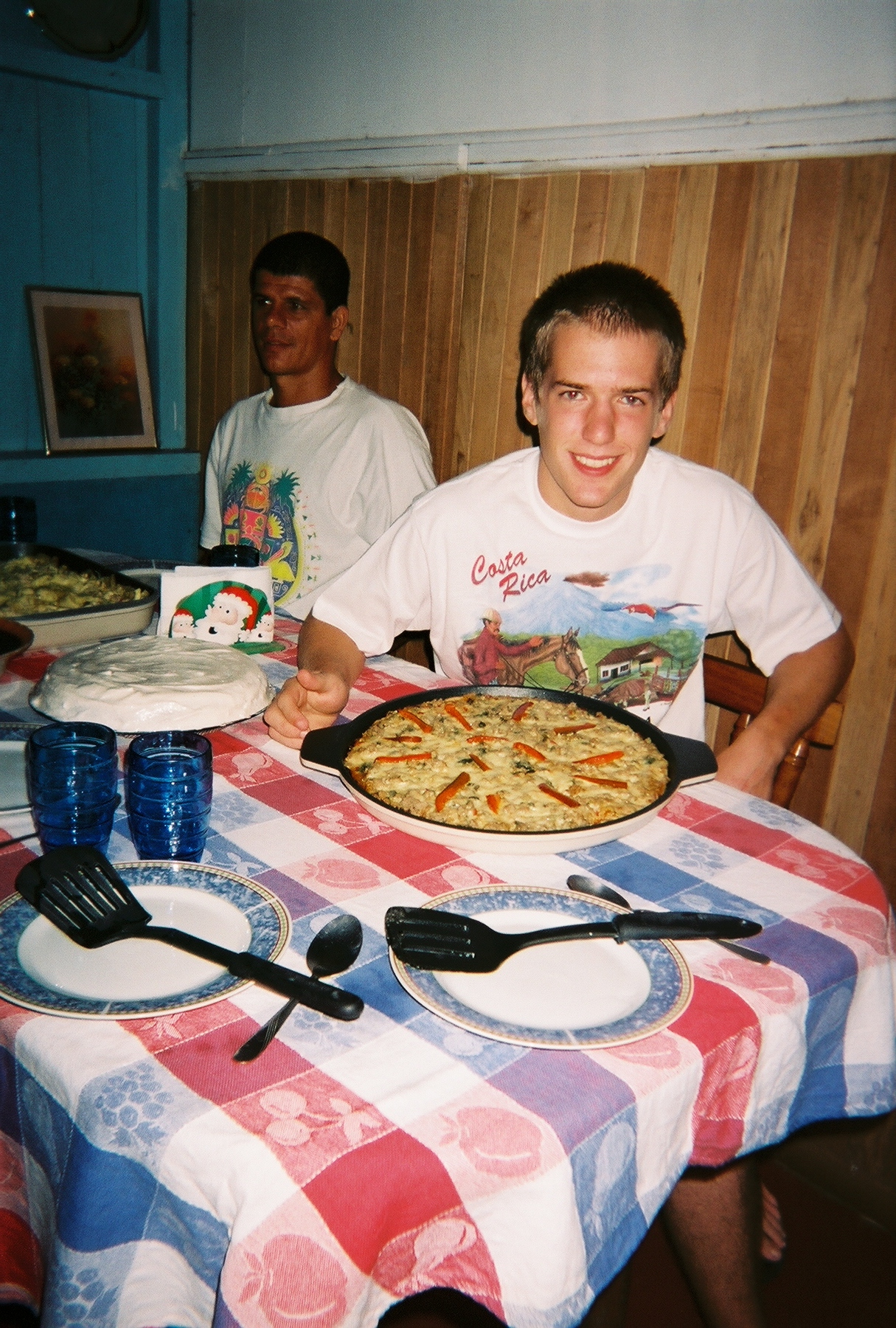
They even have pizza in Costa Rica, what’s not to love?
girlfriend, started a business and married my girlfriend and rode off into the sunset.
It was my best explanation yet. It included all the highlights, the tense, do-or-die deal-breaker moments and the realization of my new life. Had I had a pen and paper, this would have been the first draft of my autobiography.
At the end of my tale, which she had shown great interest listening to, there was a brief pause, followed by her question: “So when do you plan on going back to the U.S.?”
I was mildly startled by the question. “What kind of question is that?” I thought.
“Of course I plan on… I mean in a few ye-ye-years… This will all… eh, eh… When I get a job with CEO pay!” I finally blurted out to dodge the question.
I didn’t know why that was so hard to answer. I should have been prepared. Wondering why I wasn’t kept me thinking the rest of the night.
I came to the conclusion that it was quite a loaded question.
Had I planned to go back, I couldn’t expect people to think what I’m doing here is serious. It would seem this almost 10-year voyage that led me here would be for nothing. And if I didn’t go back, would I be running from the American dream?
I’ve never thought much of what other people think of me, but this was heavily influencing my answer. How I answer might cause people to form a different opinion about me.
The question reminded me of a couple I met once in Costa Rica. They had been married for 15 years and had no children, and every year they are still asked about having children.
They had no children because they didn’t want any – and I’m sure they decided that a long ago and that it is a non-issue for them – so I imagine they, too, are caught off guard when the question comes up.
I wonder if they ever make up an excuse just so people won’t think it is so different. Maybe that should be my strategy, too. Maybe what I am doing is a little too off the norm and people unconsciously assume this will all end.
Well, here’s one reason that’s a faulty assumption.
From 2004 until 2013, I never had a single address for more than 10 months at a time. Whether I was at college in Minnesota, teaching English in Spain, riding out the recession at home or traveling throughout Central and South America, I never had any intention of settling down.
So you would think that now after over more than two years in one place and one year of marriage I would be itching at the sides to make a change, if only to go back to the United States. But that thought has never really crossed my mind.
I still travel back a few times a year, and I have a place here for my parents to stay whenever they want to visit. Plus, with technology, a video call is never more than a moment away. If I do get lonely there is more than enough family to go around.
Over the years, I’ve been “adopted” into many families and married into one whose family tree is bigger than a sequoia. I don’t know in what moment the question became irrelevant but other than in the CEO salary scenario, I think I am pretty well settled in.
My colleague really stumped me that first night with that innocent, curious one-liner, and my answer probably wasn’t satisfying at the time. But redemption was served up fresh the next week, when my colleague, now back at work, messaged me: “Oh my gosh, Costa Rica was so wonderful, I can’t believe I was only able to stay for a week.”
I’m sure now she doesn’t even recall asking me that head-scratcher in the first place. Maybe that is why no one really asks. Spend any amount of time here and you’ll forget you had that question for me in the first place.
You may have noticed a new and improved logo appearing on our web and social media sites. In addition to a new webpage design we thought it was time after almost 3 years in business to change things up a bit. Now you’ll see a clean fresh image to go along with our same mission: Providing travelers with immersion experiences in Costa Rica. Thanks to all who participated in our previous poll, ¡Pura vida!
Wednesday afternoon April 15th felt a little strange. Something didn’t feel right. Maybe it was the cloud formations in combination with the wind patterns but something didn’t feel right climatically.
In Costa Rica it really isn’t difficult to say what the weather will be: rainy or sunny. What is difficult to predict is when and where it will be one of those two options. You can travel a few miles down the road and go from sunny and clear to cloudy and rainy. Sometimes you can look out your window and see (and hear) what appears to be a storm approaching however it may never arrive and just stall out where it is.
Weather patterns don’t enter from the west and exit east. They just develop and expand for a few hours until their energy runs out. That’s what made Wednesday afternoon so interesting. It hasn’t rained in San Ramon since December and the rainy season typically begins sometime in April or May. It really depends on where you are though in Costa Rica. Some places it rains the whole year, other places only 9-10 months and some places only 4-5 months.
Rain cloud or normal cloud?
That afternoon as I was looking out my window towards the NE I saw the storm cloud. Was it raining just outside of town? Or was it just threatening? Should I take the clothes off the line or risk being caught off guard? I decided to play it by ear because something didn’t feel right.
I went back to work and after about an hour I heard the slight “tac—tac—tac—tac” noise that the rain makes when it hits the metal roof sheeting. I jumped out of my chair and went into the backyard to confirm my suspicions. Yes the clothes were being sprinkled on by big cool drops of rain, totally refreshing on this 80 degree day. A few minutes later the “tac-tacs” on the roof would increase to a full blown snare drum so loud that you would have to yell to have a normal conversation. For instance, imagine you are watching TV in your room and your mom comes in and starts vacuuming. If you are lucky and have a two story house you can escape the madness by hanging out on the ground floor until symphony subsides.
Now some people may dread the idea that it is going to rain for the next 8 months but with so many droughts all over the world this is really a great blessing. Everything in and around San Ramon has turned to a dirty, brown color and the wind has howled up numerous clouds of dust making it impossible to keep anything clean for more than a few hours.
That afternoon it rained for about an hour. As I write this two days later it hasn’t rained since then and I haven’t felt the indescribable sensation that it might rain. Maybe it is
Ready for the rain
something that you pick up unconsciously after living here for awhile.
I do know that the transition will be happening soon and I am looking forward to the greening pastures and the reduction of dust in my lungs. I’m also hopeful the rains will allow Costa Rica to keep its streak of producing all its electricity renewably.
Note: This publication was from a trip to Caño Negro in February 2015. Written by Dustin
You wouldn’t think much from the surface, but it was hard to believe I could see so much wildlife floating down a dirty, sooty river in the middle of a flat, wetland region.
Strange that a place like this could be an attraction, when the country has numerous
Welcome to Caño Negro?
rainforests, crystal clear rivers and both the Pacific and Atlantic oceans from which to take in real beauty.
But there it was.
We had turned off the highway and onto the gravel road leading to the river a few hours earlier. The sky was threatening rain. We were surrounded by muddy marsh waters on either side of the elevated road.
All of a sudden the guide got really quiet. This person – who could talk your ear off about anything on the side of the road – now seemed a little perplexed.
I wasn’t sure whether today was a bust – maybe we had turned down the wrong road or the animals had just decided stay in bed today. I wouldn’t have blamed them, given the weather.
I could tell our guide – pulling out his binoculars – was looking to find anything he could talk to us about. At this point, all he had was mud or clouds.
And then, almost as if God had answered his prayers, the first signs of wildlife appeared.
Swooping over our van and landing harmlessly in the brush was a pink stork, or something like that. It stood on its stick legs and incessantly picked the ground for food like a hen eating feed.
You could almost feel the air pressure drop as the guide let out a huge sigh of relief. He
was probably thinking, “Well, at least we saw a bird today.”
Since this was my first time visiting this river, I really had no expectations and would have been fine with any outcome. After that and before getting on the boat we found ourselves a few hundred feet from some caimans sunning themselves on the edge of the river, I figured the guide would had been elated, but he seemed unimpressed.
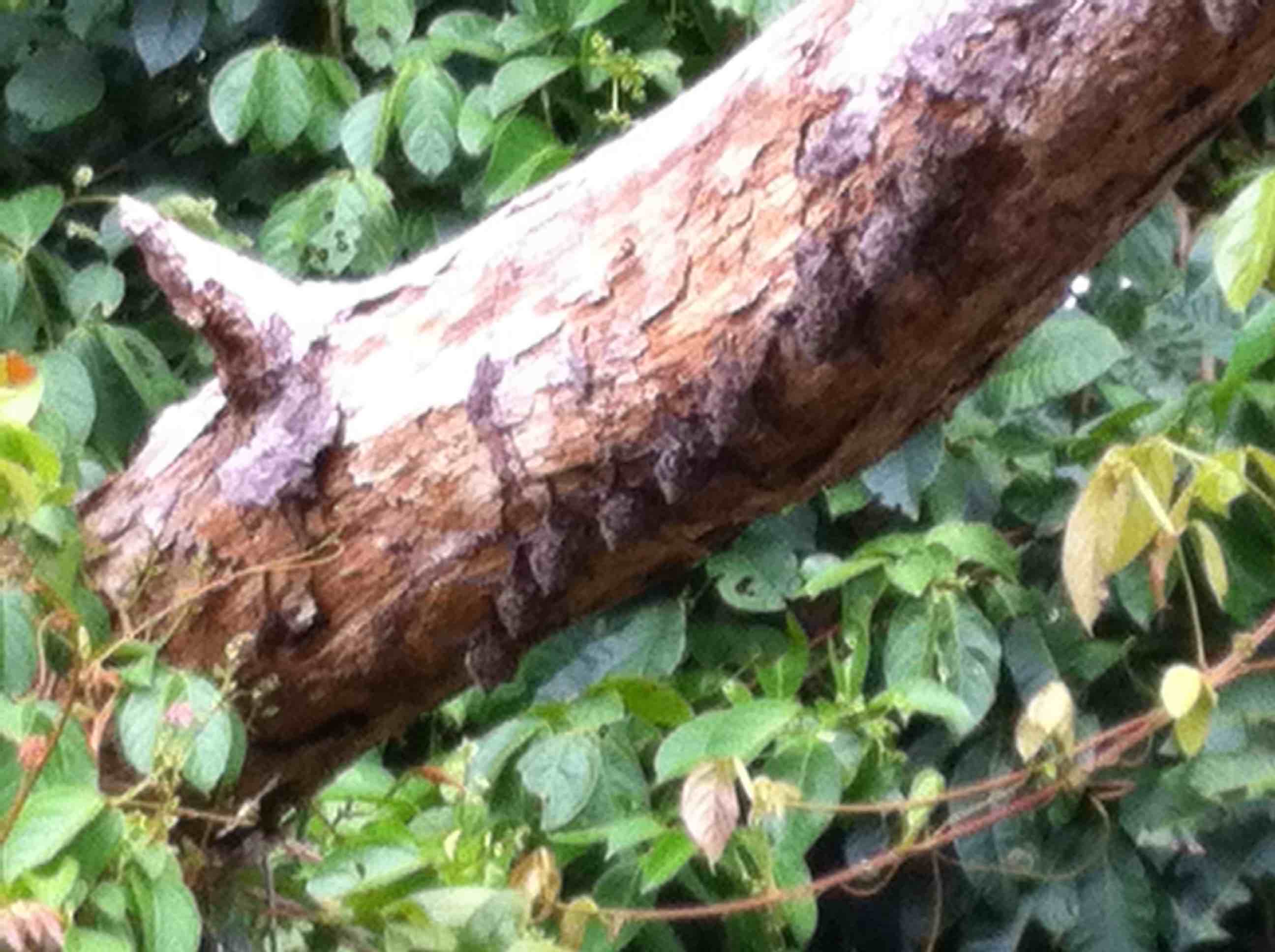
His focus was showing us things you couldn’t pick out with the bare eye, like a line of bats sleeping perfectly camouflaged against the backdrop of a tree trunk. He found turtles on all sorts of terrain.
Do you see the bats?
He knew the route quite well and knew how to literally get the boat rocking with little effort. Just by motioning his hand to one side or the other, it would cause tidal wave as people moved from one side of the boat to the other. His enthusiasm was genuine, but you could tell he had seen these animals many times before.
We moseyed our way down the river, stopping to point out more things the guide had seen countless times before, when we heard a shriek. Not from the forest, but from our boat as our guide was anxiously directing our boat driver to the bank.
With his binoculars, he observed a tiny ball of fur perched up in the branches. It was a sloth, one of the slowest-moving creatures in the world, scratching himself on his head like a monkey.
I’d seen quite a few sloths in Costa Rica, but never one even moving at turtle speed, let alone head-scratching speed. They digest food so slowly that food they eat today won’t be used as energy for a few days, so they have to calculate every physical exertion that they make.
I felt the guide’s excitement.
Shortly after spotting this creature, the whole riverbank appeared to come alive. We heard the booming howl of the howler monkeys, and shortly after, we found a group of them playfully munching on leaves. After that, we stumbled upon a troop of spider monkeys practicing acrobatics in the branches (my first time seeing these in the wild).
Size doesn’t matter: they are one of the loudest animals on earth
Our content guide decided to call it a day and take us back to the dock for lunch. The sun had come out, and life was good.
We put the boat into high gear, when all of a sudden the driver cut the engines, threw it into reverse and swung us back into the bank to stare at the brush.
I can’t imagine what kind of sixth sense guides have to pick out things while traveling down the river at high speeds. But sure enough, after a few moments, we began to notice the branches moving up and down and then saw the unmistakable white face of the capuchin monkey looking out at us to see what the big commotion was.
There are four types of monkeys in Costa Rica, and three can be found on this river. I don’t know if a tour group had ever hit the trifecta in one day, but we pulled off what seemed to be a remarkable feat.
After cautioning the group for hours that we might not see many animals, the guide could safely let his guard down, knowing we got our money’s worth and then some.
If a picture is worth a thousand words, being there is worth a million. It’s just not the same as going to the zoo and seeing caged animals. Seeing them in their natural habitat is amazing.
I’m pretty sure our guide went home that night to brag about all the wildlife he saw that day. It must be a big ego boost for them. Even on the drive back to town I overheard him arguing with the other guides, saying how he too had also predicted it was going to be a sunny day.
Dustin lives in Costa Rica and offers immersion experiences through the website costaricafrika.com. Find out more about him here.
Note: This post was originally written in January 2015 for a local newspaper in Verona, WI.
It is with immense guilt that I admit this.
I am an enabler.
I open doors for people, allow them to walk through and then get out of the way. Even though I can’t control what happens after that, I still feel a responsibility for setting off that chain of events that has an irreversible effect on one’s life.
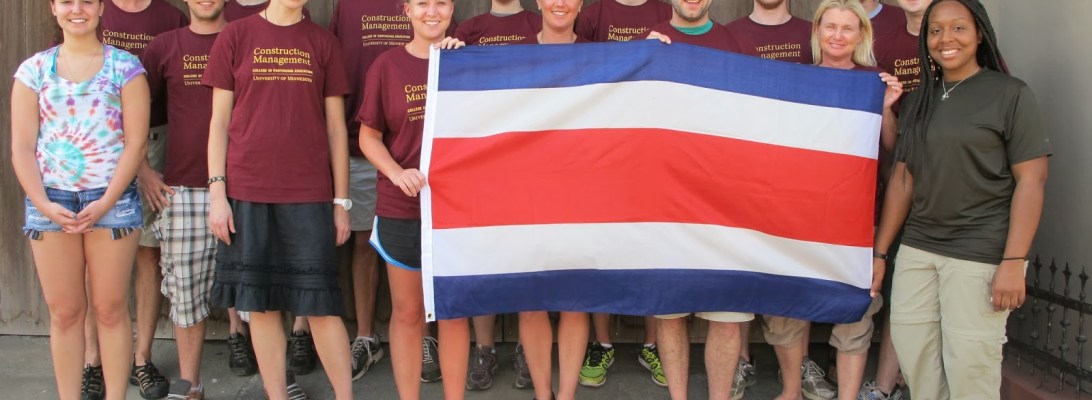
The most recent incident happened with a group of 14 University of Minnesota construction management students who spent two weeks in Costa Rica.
Bear in mind, my role was purely logistical. I put a roof over their heads, meals on the table and made sure they experienced what Costa Rica had to offer. Costa Rica did the rest.
But still I feel guilty.
They experienced the beaches and rainforests. They culturally immersed themselves so much that in two weeks they could not only tell you where coffee comes from but how to ask locals for help finding a bathroom. To top it off, they completed a capstone course to put the finishing touches on their collegiate careers.
But then they had to go home.
I recall my first visit to Costa Rica, how painful and heartbreaking it was to leave after six months. I can’t imagine how it would have felt after only two weeks.
This particular trip had gotten off to a rough start. Within 20 minutes of arrival we were forced into a local shopping mall to wait for some students who arrived on a different flight at the same time but were stranded on the tarmac. (Apparently there weren’t enough gates; who would have thought you could land 15 planes in an hour at an airport that serves a country the size of West Virginia?)
As a result, my Costa Rican chocolates melted in the shuttle bus and our highly entertaining Costa Rica trivia game garnered only an emergency contact card as a prize. In an unrelated note, it was also uncovered how old I am, as only half the group knew who Scottie Pippen was.
We cruised through the Costa Rican countryside and came within view of San Ramon just as the sun began its descent behind the mountains surrounding the town. The anticipation was building as only moments separated the group from their first “real” steps into this foreign land.
Could we drink the water? How do we greet the locals? Will we eat with our hands?
In order to calm their nerves, I had strategically devised a pizza delivery combined with an NFL playoff game to avert a full-on culture overload. However, come Day 2, we were back to immersion.
We began with both the most majestic and erie canopy tour I had ever witnessed. Imagine
That might be a monkey…
a foggy, old abandoned ghost town, but instead of buildings you have trees and branches that appear at a moment’s notice as you’re flying through the rainforest canopy suspended by a cable.
For a first-time rainforest experience, this couldn’t be beaten. From there, we lunched at a local family’s home and toured their farm. Many were impressed that this family could produce almost all the food they needed just from their plot of land.
After lunch, I scheduled an orphanage visit to show the students what a typical Costa Rican orphanage looks like, knowing that they would later design an addition for another one. Despite the intent of our visit, our focus would be deterred shortly after meeting the children.
“Gringos! Gringos!” they greeted us excitedly. Since I had expected this to happen, I somehow assumed the students were expert balloon animal makers. But it turned out only two students could make them and a few others had the actual lung capacity to inflate the narrow suckers.
We weathered the chaos and the bigger takeaway had to be brightening the children’s day.
These experiences provided many conversation-starters as we wound down the day at the hot springs fed by the Arenal Volcano. With plenty of mental and physical exertion, I knew this group would be craving for more.
And so it would continue. I couldn’t do enough to satisfy the group’s appetite.
¡Qué pasión!
We visited the impoverished community of Bajo Tejares, where the students would prepare a construction proposal for a women’s empowerment group, then went to the orphanage site where we finally achieved a cultural breakthrough with the children via the construction of some highly technical paper airplanes.
Salsa lessons, taste testing coffee batches at the local processing plant, cultural museum visits, and even a weekend excursion to the beach were wholly chewed and swallowed. As was lunch and dinner at Soda Xinia’s (Soda means a small restaurant that serves local foods, and in this case, it was the patio at the home of Xinia, a housewife by day, master chef at a moment’s notice).
All of this concluded with the successful presentation of two construction proposals to help
The university crew
our local partners – Mujeres de Cambio women’s empowerment group and the orphanage – advance their missions and serve the community.
Wow! Getting that all down on paper does make me feel a lot better.
I should have felt proud for all the experiences they had. But I feel guilty I was only able to hold that door open for two weeks. And that only 14 students had a chance to walk through that door.
I am confident, though, that they have jammed that door open, broke the closer and, some I’m sure, have even removed the hinges and turned that door into a hallway.
Have you ever lost your passport or got it stolen? Ever needed something notarized? Well those are probably the main reasons any US citizen would visit their embassy in Costa Rica. I just went to renew my passport and want to share some of my experiences about renewing and what Costa Ricans go through to solicit a visa to the United States.
Do:
Always check online first for your service and see if you need an appointment. In order for me to renew my passport I had to schedule an appointment online. Even though all I had to do was turn in two pages of paperwork, a passport photo, and pay $110 I still had to get an appointment.
Don’t:
Try to get into the embassy without an appointment unless it is an emergency. The security guards are super friendly to US citizens however they don’t let anyone by unless you are on the list.
Do:
Leave as much as you can at home. If you have a phone you have to leave it with the guard and if you bring a purse be prepared to have it completely emptied out in front of everyone and passed through a metal detector. You literally feel like you have arrived to the US with the amount of security to get into the building. It is just like the airport except you keep your shoes on, for now at least.
Don’t:
Bring pepper spray or guns to the embassy. After a very pleasant greeting from the security guard I was immediately asked if I was packing heat or carrying mace. “Excuse me, what?” I had to clarify. I was pretty sure I was in a safe neighborhood but I was pretty puzzled, they must ask that for a reason, right?? It’s illegal to carry firearms in Costa Rica so even if I was it would have been in my best interest to say no. Well, if it is on the guard’s script something must have happened before. They should do it Minnesota style and put paper signs on the front doors of public buildings saying “NO FIREARMS PERMITTED”. Gotta love that constitution.
Do:
Get your picture at the embassy. I paid $2 for two passport size photos inside the embassy. I only needed one and I probably paid more than I should have but the peace of mind knowing that it is going to meet their requirements is worth it. I’ve tried to go in San Ramon and get passport pictures and they don’t seem to understand that it must be a white background, looking straight ahead etc. The one time I went in town I came back with high school yearbook style photos.
You can try to take your own with a digital camera but if you only need a few copies really $2 can’t be beat.
Don’t:
Try to help your Costa Rican buddies at the visa interview at the embassy. In the past I’ve been able to go in with my friends and accompany them right to the interview. The agent would even ask me questions to vouch for their character. That is not the case anymore, hence the prior point about not trying to enter the embassy unless you have some type of appointment. Now they give you a piece of paper right when you enter explaining if you try to accompany them they will deny everyone’s visa in the group.
Do:
Enjoy first class service. US citizen? Please pass go, collect $200, enjoy complementary champagne while relaxing in the jacuzzi. They really have signs that say “If you are a US citizen, do not wait in line, go directly to window…” For anyone that has ever had to deal with Costa Rican bureaucracy this is a breath of fresh air. If you are not a US citizen you have to stand in line and get shifted from station to station, answer repeated questions about why you are here what you are doing etc etc. I felt like a king to be able to walk around freely.
Don’t:
Take pictures. Ref: this blog entry.
Do:
Encourage your Costa Rican friends to adapt this level of efficiency and organization. What takes thirty minutes here would take 2 hours at any Costa Rica government agency. Trust me, I’ve woken up at 4am to get to Costa Rican immigration at 6am to wait in line till it opens at 8am, then wait another couple of hours just to be able to turn in a handful of documents (which coincidentally have been sitting in their office now for about a year with no activity, but that is another post in itself). The embassy cuts out all the BS. No phones, entrance restrictions, guards at every station constantly making sure people are moving from station to station to get through the process as quickly as possible. To renew my passport it took 30 minutes and that was because one of the agents called in sick. The lady at the counter even apologized for the delay. I was more concerned about my friends trying to get visas. There were about 50 people ahead of them however they got through all of them in about an hour.
Don’t:
Schedule an appointment in the afternoon in the rainy season. When you get there you’ll probably have to wait outside a bit and there is no shelter from the rain (which I’m sure there is a very good reason for not having a covered area). The sooner you identify yourself as a US citizen the sooner they’ll let you in. If you’re not a US citizen, bring an umbrella and a plastic bag for your papers as they do check them in the street.
Do:
Support your tico friends. Help them navigate the online visa application process (not everything is translated to Spanish). Keep in mind they are probably not used to this kind of no BS organization and if they do something wrong the penalties are enforced.
Reiterate the following:
-The cost for completing the whole visa process is currently $160. If you ARE NOT approved for a visa you ARE NOT REFUNDED anything. This is for Costa Ricans asking for a travel visa to the United States.
Consider it a donation to the US government. So make sure you qualify. I’d be willing to bet that most days at least one person leaves the embassy in tears. One twenty something year old girl there was an assistant at a daycare center who had only been working there for three months, single, no university degree, no car, no property. She didn’t leave crying but seriously I could have saved her $160 with a quick conversation, I know people with more qualifications than her and still get denied.
Conclusion:
If you live in Costa Rica and rarely/never go to the embassy then you are probably staying out of trouble and living the good life. Or, you’re probably in a lot of trouble 😉
Did I miss anything? What has your experience(s) been like? Let me know in the comments!
This blog typically is directed at all things Costa Rica however I had the unique opportunity to spend a week in Guatemala (a neighboring Central American country to the north of Costa Rica). This is the final part of a series of posts that will cover my week long trip. You can read part one here and part two here.
It was about 9:30pm and I was just about to doze off in my hotel room. The next day we had to depart at 6:30am in order to get to our village visits so I was looking for one of those “early to bed, early to rise” nights. With the TV on low and my consciousness slowly fading into dreamworld I was promptly started by the sudden ringing of the room phone.
“Hi Dustin, please come meet the group in the lobby. There has been a change in plans.” Well this had interesting written all over it. Living in Central America you become used to things that would never be a concern in the US. As a University Construction Management student I remember reading through construction contracts and chuckling about acceptable reasons for finishing a project past its due date. Hurricanes, war, strikes, political protests. Yeah, like those things were ever going to happen so much that it would disrupt a construction project. Well those things are very real here.
Most places only have one route to get there. If there are detours they are a good 3-4 hours. So any of these things could quickly throw a monkey wrench into everything. Sure enough there was going to be a strike the next day that planned to block all the highways leaving Guatemala city. Why were they blocking the streets? Who were the culprits? You might be a little surprised to hear that the government hasn’t been paying their doctors since July.
This might seem unheard of that a government would not pay their employees. Actually last year in Costa Rica teachers went on strike for one month because some of the teachers were not getting paid. Some. They interrupted the school year for one whole month before the government got their act together. And there were various days when roads were blocked in protest. In the end all everyone got paid, even for the month they were on strike and there was no reduction in vacation time or extension of the school year due to the strike. Everyone won except the senior students who had one less month to learn and prepare for the national exam that they needed to pass in order to graduate, but I digress.
Who knows how the Guatemala doctors will fare but I was not the least bit surprised by the situation so when our departure time got pushed up to 2:30am in order to avoid the blockade I thought well at least we would avoid the morning rush hour. I have to say though it could have been worse.
That same night on the news we heard of some schools that weren’t being allowed to teach because some neighborhood gangs were threatening them that there would be violence if they didn’t pay them 15 thousand dollars. I never figured out why they wanted that money but it probably wasn’t a very good reason. Nevertheless I’m very content that the most I’ve had to deal with in Costa Rica are peaceful marches and roadblocks.
Throughout the course of these posts a lot of things have swung in Costa Rica’s favor however one obvious advantage Guatemala has over Costa Rica is its transit system. The main highway that runs through Costa Rica connecting Nicaragua and Panama is primarily a two lane road, one lane for each direction. If you’re lucky you might have a passing lane on some of the steep uphill climbs but keep your guard up because those lanes are closed in random spots from mudslides that happened years ago that the government has never repaired and doesn’t plan to repair them. Not so in Guatemala.
All the main highways going in and out of the city are 4-6 lanes and there are always additional passing lanes for the uphill sections. Mudslides are just as common as in Costa Rica but when they happen the government is there to clean it up quickly and re-open the lanes. They still have too many cars in the city but what big city doesn’t have traffic issues? My only concern was feeling sick from inhaling all the fumes sitting in idling traffic. Besides that the only other issue I had with the roads were the number of speed bumps. This is really the only way to control speeding in Central America but it was a little over-exaggerated here. Usually when you get to a school zone you have one bump at the beginning of the school and one at the end however in Guatemala they would have like four. And for the manual car drivers, they were spaced just far enough apart so you would have to shift from first to second gear just for a second before arriving to the next bump.
Weather/Geography
Both weather patterns are quite similar with a rainy season and a dry season at pretty much the same time of year. Guatemala is in the hurricane zone whereas Costa Rica is
Cooler climate, but excellent look out points in Guatemala
not. From what I saw the majority of Guatemala is drier than Costa Rica (similar to the Guanacaste region). They have higher elevations and are situated further to the north so it can get colder than in Costa Rica. When I was there the last week of January there were some places that got below freezing at night. That never happens in Costa Rica. Due to this it wasn’t surprising to not hear much talk about beaches. One of the crown jewels of Costa Rica, however if you ask a Guatemalan about beaches they’re likely to tell you about the beach trip they took…. to neighboring country El Salvador!
Economy
In the short time I spent in Guatemala I would have to say tourism and agriculture are a big part of the economy, which is quite similar to Costa Rica. Both countries grow lots of coffee too. One thing I noticed in Guatemala is there are not a lot of industrial coffee processing. A lot of the coffee is sun dried whereas in Costa Rica they have mechanical ovens that can dry the coffee quickly in addition to sun dried. The sun dried process takes a few days but the quality is better. In this sense Guatemala might be a little more of a “I’ll get to it mañana” country than Costa Rica. Other than that you will see a lot of corn being grown in Guatemala. We planted fruit trees in some of the rural villages we visited to help diversify their diets because everything they were eating was corn based. You’ll see corn in Costa Rica too, but sugar cane, bananas, pineapple, etc all have their growing zones as well.
To conclude my little Costa Rica-Guatemala series I’d like to talk about the culture. My wife is Costa Rican and her and her parents joined me on this trip. It was very interesting to see how they interacted with the locals and to hear their opinions about the culture. They shared some of the same reactions as to why they would live so remote but were very curious to learn about how they lived. My in-laws grew up on farms and were able to teach the Guatemalans about farming. Some of them knew so little that they weren’t even sure how to plant trees or seed a garden properly (not that I knew any of that either, but at least I know I have the resources if I ever plant my own garden).
I have to say both cultures pride themselves on their friendliness. The Guatemalan accent is very sweet and inviting and even though the Costa Rican accent is distinct it is filled with “honeys, sweeties, and cuties”. There seemed to be an ongoing battle between who could be the most polite and sweet.
One astonishing thing that is echoed throughout many Central and South American
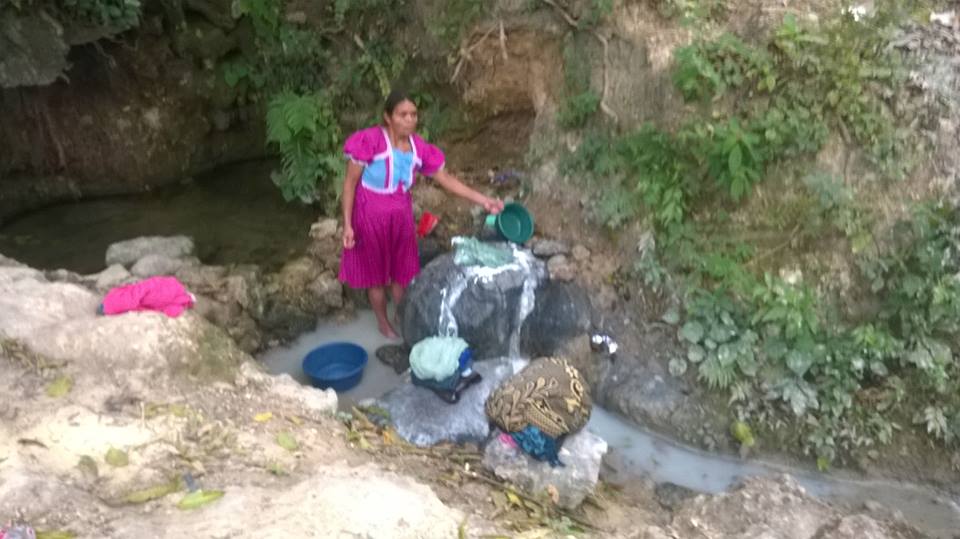
Traditional dress
countries is the cleanliness of their formal dress. Living in mud huts in dry and/or rainy conditions it is beyond belief how they maintain their traditional dress spotless. We visited villages on a Sunday and everyone had on their sparkling Sunday best.
This concludes thoughts and reactions after a week in Guatemala and how it compares to living in Costa Rica. Despite its flaws I’d still choose Costa Rica over Guatemala however the experience traveling there was refreshing and exciting. It makes you thankful for what you’ve got too. Costa Rica is a step above the rest. What I saw in Guatemala compares to Nicaragua and Panama living conditions. I’ve never been to Honduras or El Salvador but I would assume they are similar to Guatemala too.
As for getting back to sleep after resetting my alarm for 2am it didn’t really happen. The adrenaline switch was on and shortly I would be on my journey.
UPDATE: The Fire Volcano (volcan del fuego) located just 45km from Guatemala city began erupting heavily today. They closed the international airport this afternoon so we just lucked out having flown back on the third.






 Immersion Experiences