What a difference Guatemala makes Part 2

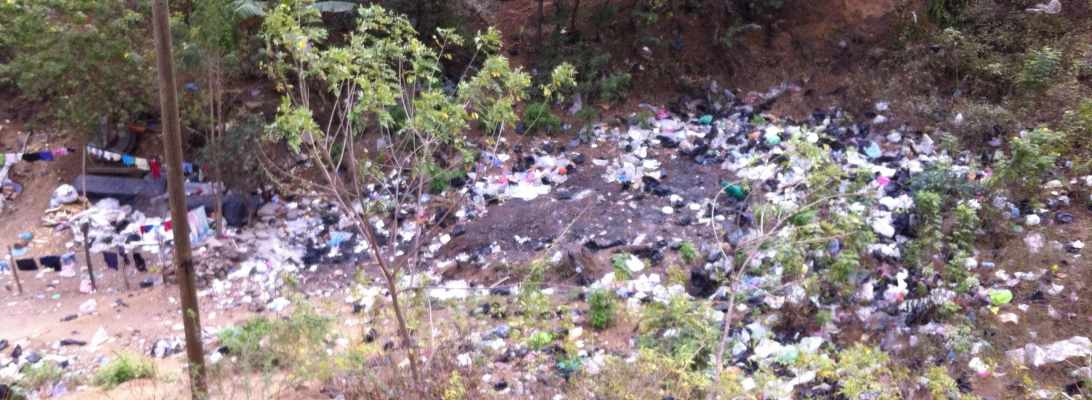
garbage dump guatemala

This blog typically is directed at all things Costa Rica however I had the unique opportunity to spend a week in Guatemala (a neighboring Central American country to the north of Costa Rica).  This is part two of a series of posts that will cover my week long trip. You can read part one here.

One thing that can’t be denied in Guatemala is that it is a relatively poor nation.  The main reason I’d traveled here was to help the poor people.  When most people think of third world poverty they think of lack of food, money, clothes and shelter.  Guatemala has all that and more when it comes to poverty.

Poverty.  It exists all over the world and Central America is not the exception however Costa Rica is better off than Guatemala.  Costa Rica has not had to endure civil wars, genocides, hurricanes, droughts, nor ancient civilizations that have chosen some of the most remote places to live in the country.

In Guatemala to visit the most needy villages we had to ride in the back of a pick up truck over an hour up a mountain on a dirt road (that is impassable during the rainy season).  I

We could cross this river - in the dry season...
We could cross this river – in the dry season…

was soo curious as to why someone would live so far away from everything.  Were they forced to flee to the mountains?  Was the soil better?  I was so puzzled that in one of the villages I straight up asked the Pastor why he lived so isolated.  His response was quite simple in that this is where he grew up and this is where his parents, grandparents, great grandparents etc all grew up.  So at some point  many centuries ago this was prime real estate???…
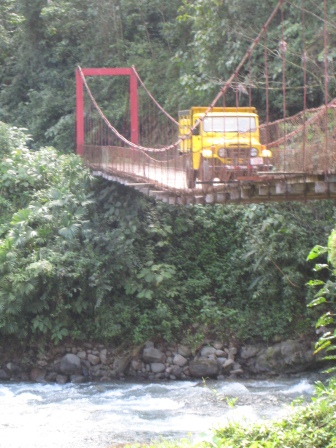
This is the shakiest bridge I've crossed in Costa Rica
This is the shakiest bridge I’ve crossed in Costa Rica

Costa Rica doesn’t have an ancient civilization history.  The country was often avoided because it was so jungly that early settlers avoided it at all costs.  In Costa Rica if a place is too isolated nobody lives there.  Granted people do live in rural areas but they have electricity, water, plumbing, and an access road to their homes.  In rural Guatemala none of this is true.  It is common for people to access their homes on foot, collect water from the stream, no electricity whatsoever, and a bathroom is literally unheard of and not well understood.

One of the projects on the mission part of my visit to Guatemala was to help build homes for low income families.  The “homes” are more like storage sheds about the size of my bedroom.  One feature not included in any of the homes was a bathroom.  I asked about this and I was told that the people don’t make good use of them.  They are so used to  peeing and pooping whenever and wherever (literally like animals) that they didn’t see a use for them.  I was told they once built some outhouses for the families but they ended using them as a storage room.  This rocked my world and gave poverty a whole new meaning for me.

No plumbing rough in needed
No plumbing rough in needed here

The villages are so isolated from everything that they don’t even realize the importance of a bathroom.  There was no knowledge, no education.  Parasite infections are so common here that people need to take medicine every six months because the water is so contaminated and hygiene is bad.  What seemed so obvious to me was knowledge that simply hadn’t occurred to the local population.  I’m sure if everyone peed and pooped in an  outhouse and washed their hands there would be a significant improvement in the overall health of the villages.  Knowledge is power and I hope efforts are made again to introduce bathrooms into the villages.  Once bathrooms are a commonplace the next issue to tackle would be trash disposal.
You can't see the school next door in this pic
You can’t see the school next door in this pic

Everyone knows it is bad to litter and you are likely to get a ticket if you are caught doing it.  Whenever I see someone litter I know that they know they are damaging the environment.  In some parts of Guatemala trash is strewn so freely it will make you sick to your stomach.  In the remote areas there is no trash collection however almost nobody burns their trash either.  Some homes I visited it almost seemed like the trash was laid out in the yard as if they were trying to grow a garden or something.  This was so prevalent that I couldn’t imagine people were doing this on purpose, they just didn’t know better.

With the remoteness of these villages you have to think that it wasn’t too long ago that trash began arriving to their communities.  Probably not until aid groups started coming trash was mostly organic.  Even talking to the Pastor he said he might go into the main town once or twice a month (a place where you could buy things that would produce non-organic trash).  There they have trash cans and campaigns to keep the town clean.

In Costa Rica the worst thing I have seen is people driving out into the country to dump construction garbage or old appliances and that is mostly because the government will not readily collect that kind of waste.  Besides that the big cultural change that is trying to be made here is to get people to recycle.  So in that sense they are one step ahead of Guatemala.

The sanitation issues in Guatemala are alarming but the solution is not that difficult to solve.  It may take time but what the villages are lacking is education.  They could really improve their health and quality of life by improving just these two things.  One thing that has been really beneficial to Costa Rica is not having to fund an army.  Instead they have been able to invest in education and that has had a lot to do with the fact you can drink the water and find bathrooms in everyone’s homes.

It’s likely that some of these cases still exist in Costa Rica but with all the traveling and volunteering I’ve done in the country I have yet to come across anything like the remote villages of Guatemala.  To speculate, maybe in Guatemala for every 5,000 families living in this kind of poverty you might have one in Costa Rica.  That’s why you don’t see a lot of poverty alleviating organizations in Costa Rica as there are other Central American countries that could really use the aid.

Stay tuned for part three of this series which will conclude the differences between Guatemala and Costa Rica.

 

What a difference Guatemala makes Part 1

Antigua view from hills

This blog typically is directed at all things Costa Rica however I had the unique opportunity to spend a week in Guatemala (a neighboring central american country to the north of Costa Rica).  This is part one of a series of posts that will cover my week long trip.

A lot of people assume all countries in this part of the world are all alike: poor, underdeveloped, politically unstable, hurricane prone etc. Having lived in Costa Rica awhile now I would like to share some differences I noticed between the two countries.  (note: In Guatemala I spent half my time as a tourist and the other half as part of a mission team working in rural impoverished communities).

Only $15!!
Only $15!!

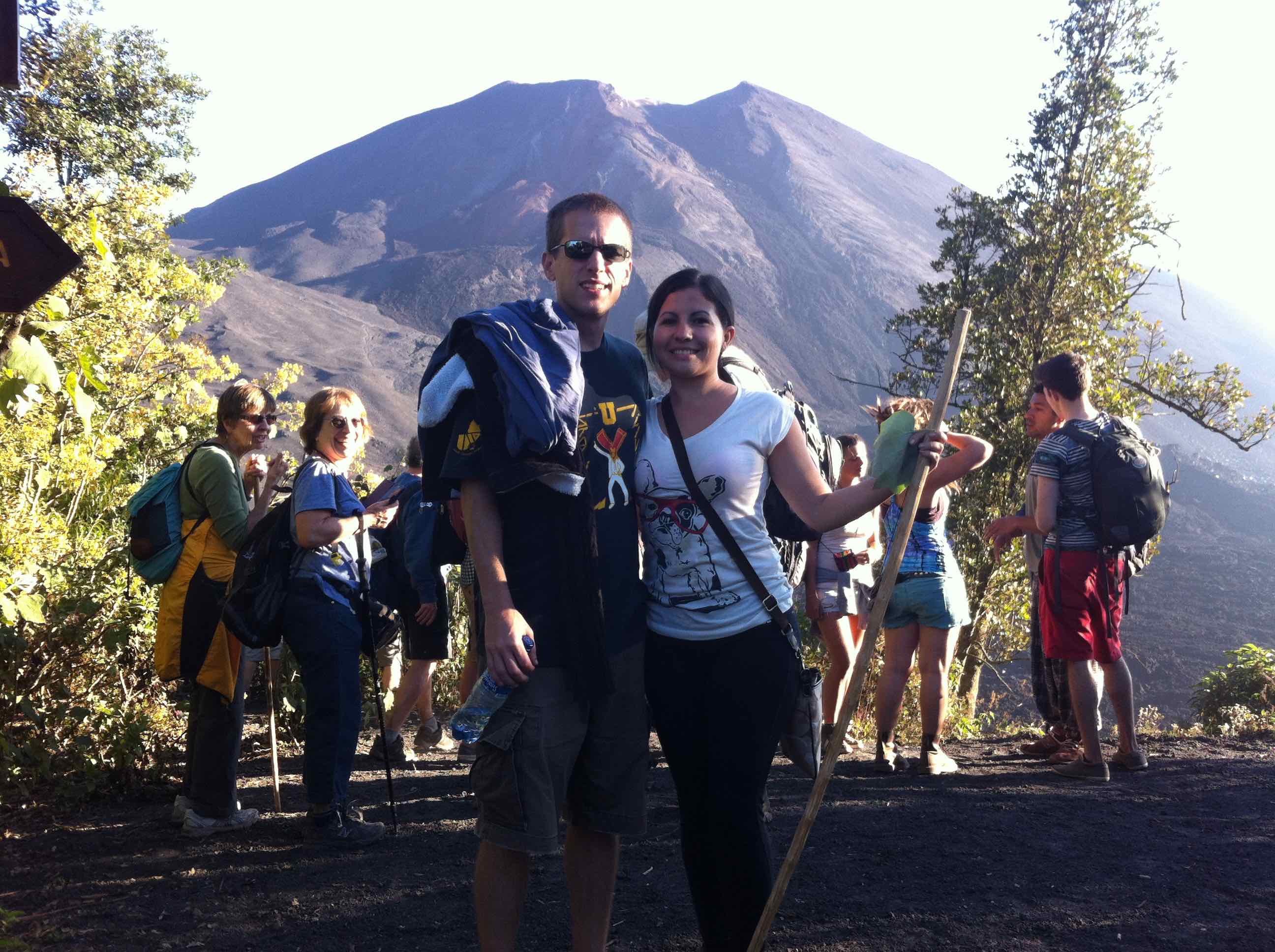
1.  Guatemala has cheap tours (compared to Costa Rica).  I wanted to cry.  I spent two nights in Antigua, Guatemala, a UNESCO heritage site and probably the most touristy city in Guatemala yet I felt like everything was a steal in comparison to Costa Rica.  They had many tours that were outrageously cheap.  Volcano hikes, boat trips, bungee jumping, and just plain old market shopping where you could find prices half of what they would be in Costa Rica.  I looked dumbfounded at the price sheet and not in a million years could I offer tours that cheap.  We went to hike a volcano and had round trip transfer (1hr each way), park entrance, and tour guide all for about $15 a person.  A tour like that runs about $30 in Costa Rica not including transportation.

2.  Costa Rica I think has better bang for its buck than Guatemala.  Sure you pay a little more but you get friendly, outgoing, English speaking drivers/guides.  I’m not saying that Guatemalans are mean or unfriendly but they are more timid in nature.  You as the tourist have to initiate conversations with them and once they feel comfortable with you they will start to open up and tell you all about their country.  You should also know a little bit of Spanish as the English is not as good as it is in Costa Rica.  Our guide gave a huge sigh of relief when she found out everyone in our volcano hike group spoke some Spanish.  I don’t think the tour would have been as engaging if they would have had to speak English.    I also wasn’t that impressed with some of the nicer restaurants I went to in Antigua.

I complain a lot sometimes about restaurant food in Costa Rica being expensive however I have a theory.  Despite being expensive the portion sizes are enormous.  I think restaurants raise their prices and then justify it by serving more food which I think is fair so really my gripe is not with the price but rather with how they are encouraging an obesity epidemic.  I didn’t feel the same in Antigua.

One nice restaurant that I went to and ordered a cheeseburger that was about the size of a typical kid’s meal burger and I got some french fries that were good but I only got about half that I would get at any Costa Rican restaurant.  On top of that the rum and coke I got tasted quite watered down and was served in a glass slightly larger than a shot glass.  For full disclosure purposes I should note that we received a 10% discount to eat at this restaurant because it was owned by the hotel we were staying at.  So technically we were “recommended” this restaurant, however it may have been a desperation tactic to get people just to eat at their restaurant.

The best overall meal price-for-quality had to have been a pizza that I got at a fast food joint in Antigua.  It was pretty decent pizza that I got for about half of what I would normally pay in Costa Rica.  Actually, I got a medium supreme pizza and 2 pepsis for the same price as my kid’s burger and half fries from the previous restaurant.

These were some observations from the tourist part of my trip and are not meant to be generalizations about the country as a whole, just my little piece of Antigua and the surrounding area.  Stay tuned for upcoming posts comparing the culture, economy, weather, sanitation/health, infrastructure etc of Guatemala and Costa Rica!

Now some pic comparisons:

Water Volcano - Antigua, Guatemala
Water Volcano – Antigua, Guatemala
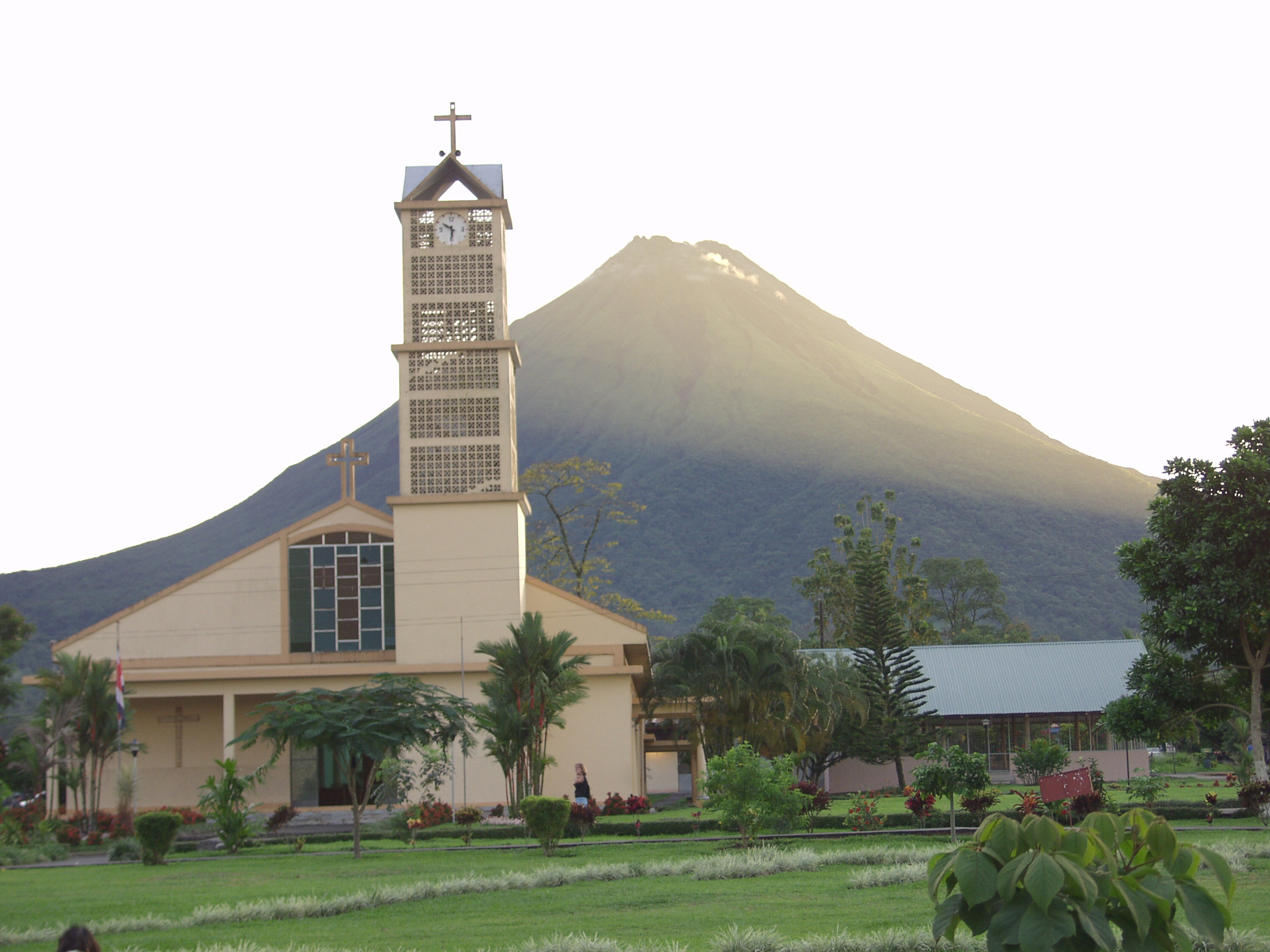
Arenal Volcano- Fortuna, Costa Rica
Antigua, Guatemala with active volcano in background


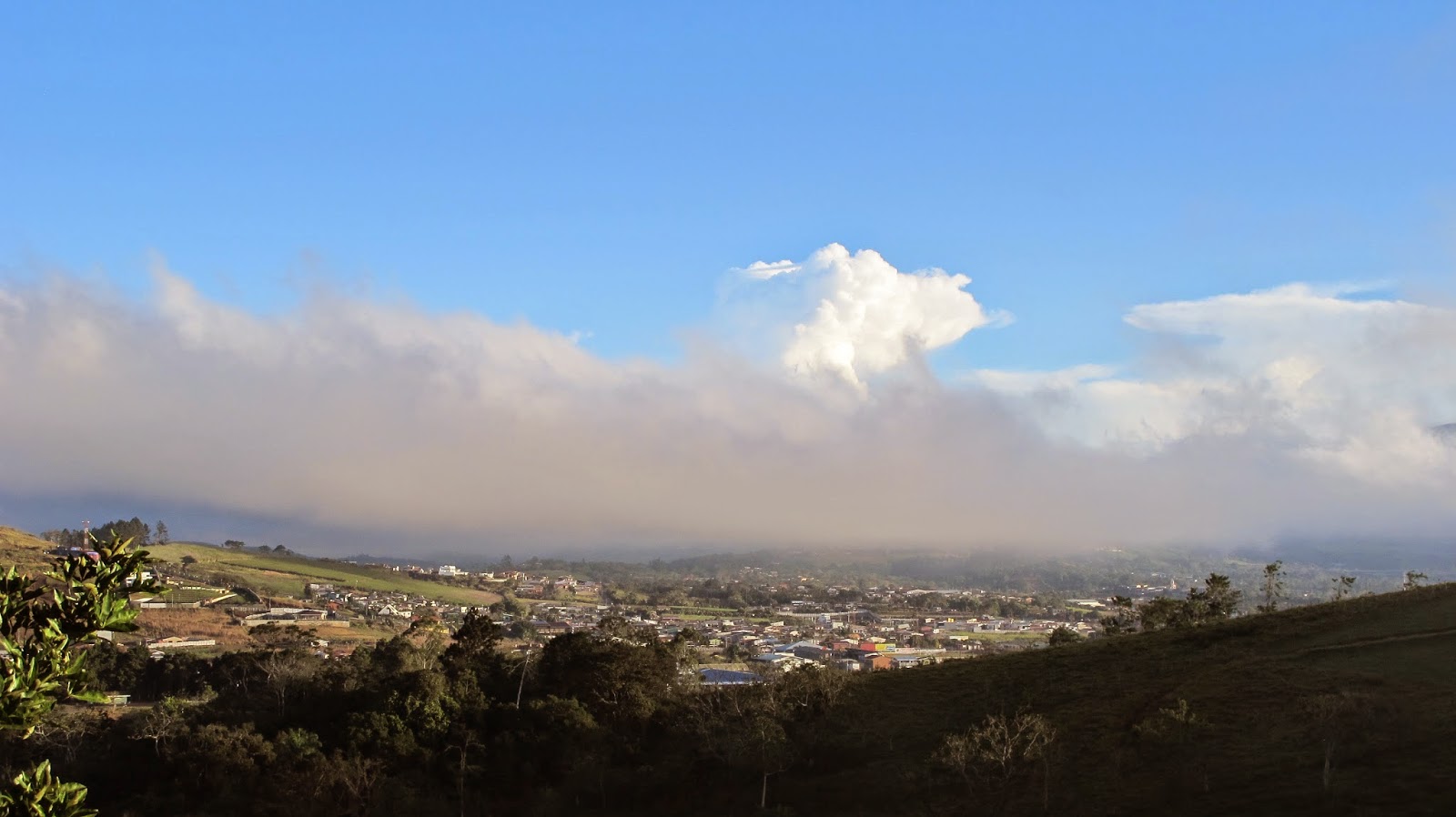
San Ramon, Costa Rica sans active volcano
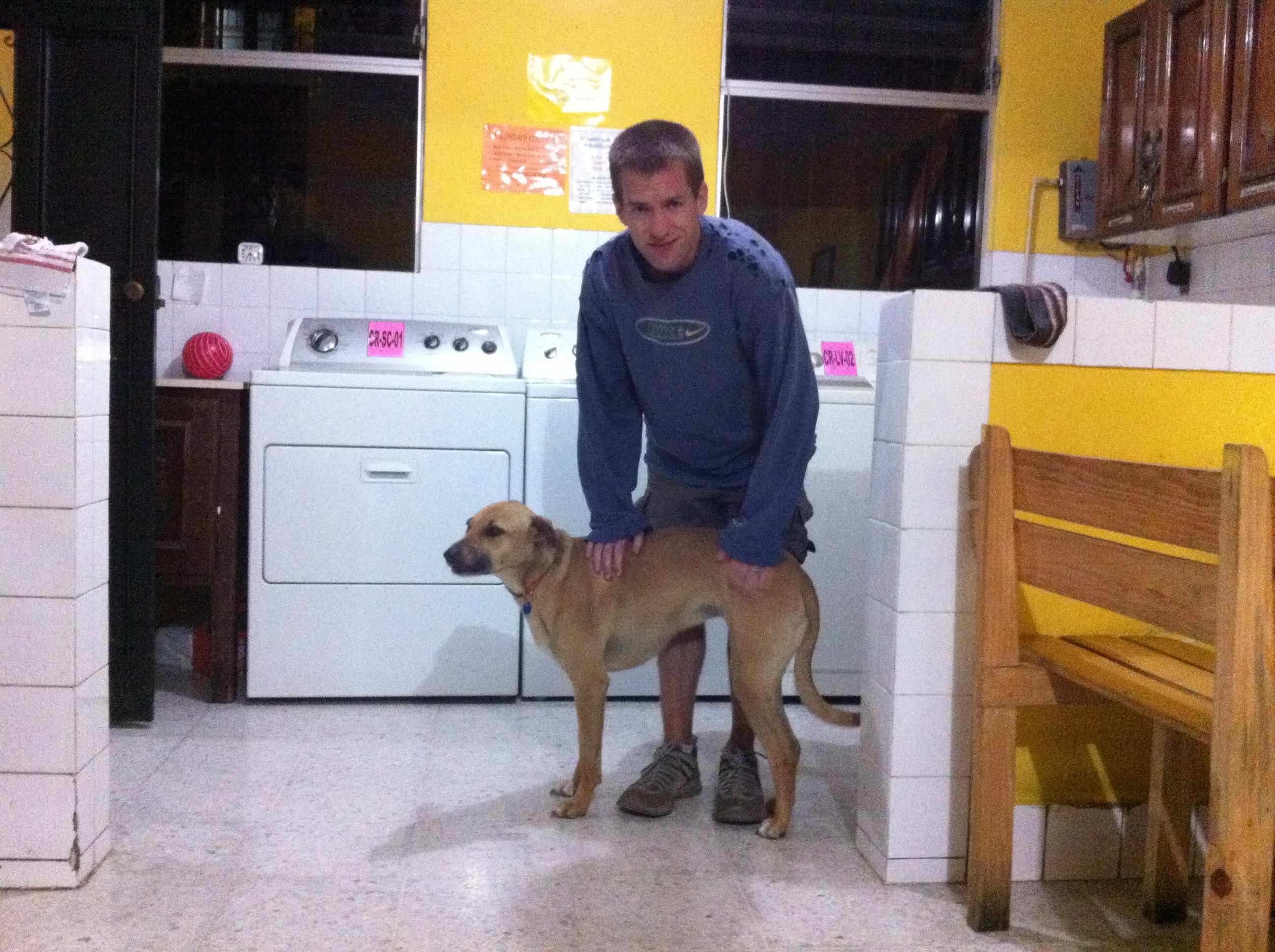
My adopted Guatemalan dog
My Costa Rican dog
My Costa Rican dog

Without winter, it’s easy to start missing fall

Note: I grew up in Wisconsin, one of the colder places in the United States.  

Fall used to mean the beginning of the end.

As the mercury began to drop and the days began to shrink, it was a slow, steady countdown to the abominable winter that always awaited us.

For me, the leaves changing colors used to be the first signs of death. I always used to cringe upon opening the closet to look for my jacket and would curse in vain having to scrape the ice off my windshield.

The end of my high school football season was always a blessing in disguise, as it signaled the end of my required outdoor activities for the year. Winter was coming. Long johns, fires, lip balm, snow shovels… ugh.

To me, fall was just a little tease from winter, sprinkling in enough nice days with enough terrible days to remind us of the ever-approaching deep freeze. Even with the beginning of the holiday season and the weekly meetings around the TV to cheer on the Badgers or Packers, I always felt an emptiness, knowing these would be short-lived highs as there was no turning back the clock on old man winter.

But then I moved to Costa Rica.

It was never about the weather, of course; I wanted culture, language and sights. And living in a tropical climate was just a bonus.

Now that I live here year-round, I have developed an “outside looking in” perspective, and what I’ve realized is that if you take winter out of the equation, fall becomes the greatest cheesehead season there is.

IMG_0026
How often would you see this in Costa Rica?

Not only is it a nice buffer between my favorite and least-favorite seasons, it has so many traditions attached to those subtle changes in the weather and carries so many childhood memories.

And that makes me a little jealous sitting on the sidelines in Costa Rica.

Living in Costa Rica has meant more or less the same weather every day. Consistently good and tropical with the occasional rain.

That is good enough for me to brag to friends and family that 75 percent of the year, the weather is better than in Wisconsin. For the other 25 percent, it’s not that the weather in Costa Rica gets worse, but rather the lack of fall.

Umbrella or no umbrella is the only change you’ll recognize here, and the monotony of that, to an experienced snow-shoveler, takes some time getting used to. When it is fall up north, it is the heart of the rainy season here. It is not by any means an apocalypse, but we receive heavy thunderstorms almost daily and the roads deteriorate faster than a stick of butter on an open stove.

I can’t complain about the heat and sun, but I do miss the climatic and environmental changes, along with the traditions of fall.

Every fall my biological clock gets flipped on its head. I don’t know what is more awkward, trick-or-treating in shorts or eating turkey without a wearing a sweater vest. The other day, I helped put Christmas ornaments on a palm tree.

Yes, a palm tree.

And Monday Night Football en Español? Well let’s just say I would rather watch the game on mute than learn how to say (much less explain), “intentional grounding,” in Spanish. Ex-pats have tried to bring fall traditions with them to Costa Rica and as much as they try, they just can’t be replicated.

I’ve stopped trying and am now figuring out how to fill the void. I think that’s part of the problem.

Nothing of great nature happens from September through November. Many people are flat broke from summer vacations and are trying to save money for the Christmas season. By law, they are required to receive a year-end bonus, but that doesn’t get paid until December.

There is also a lot of anticipation for the rains to end so the harvest season can begin and resupply the world with fresh coffee. Needless to say, there is a lot to think about during those rainy afternoons.

Once a sign of death, the beautiful September foliage now paints every hillside in my imagination. Grabbing that jacket from the deep ends of the closet? Duh, it’s gotta be football season. Scraping the ice off the windshield? At least I won’t have to mow the lawn anymore this year.

Maybe it’s easier to see the brighter side of fall knowing that I won’t be there for the ensuing deep freeze.

Last year my timing was perfect. I got to spend the better part of October and November in Wisconsin, and I felt shame. Like a corrupt politician splurging on a yacht with taxpayer money. The day before I headed back to Costa Rica, we received our first substantial snowfall of the year.

The pre-Costa Rica Dustin would have rolled over in bed and willed a profound sleep until May, but this year I was content as ever. I could have been the first one out making snow angels.

With old man Winter out of the way, I could finally embrace fall and usher in the onset of winter.

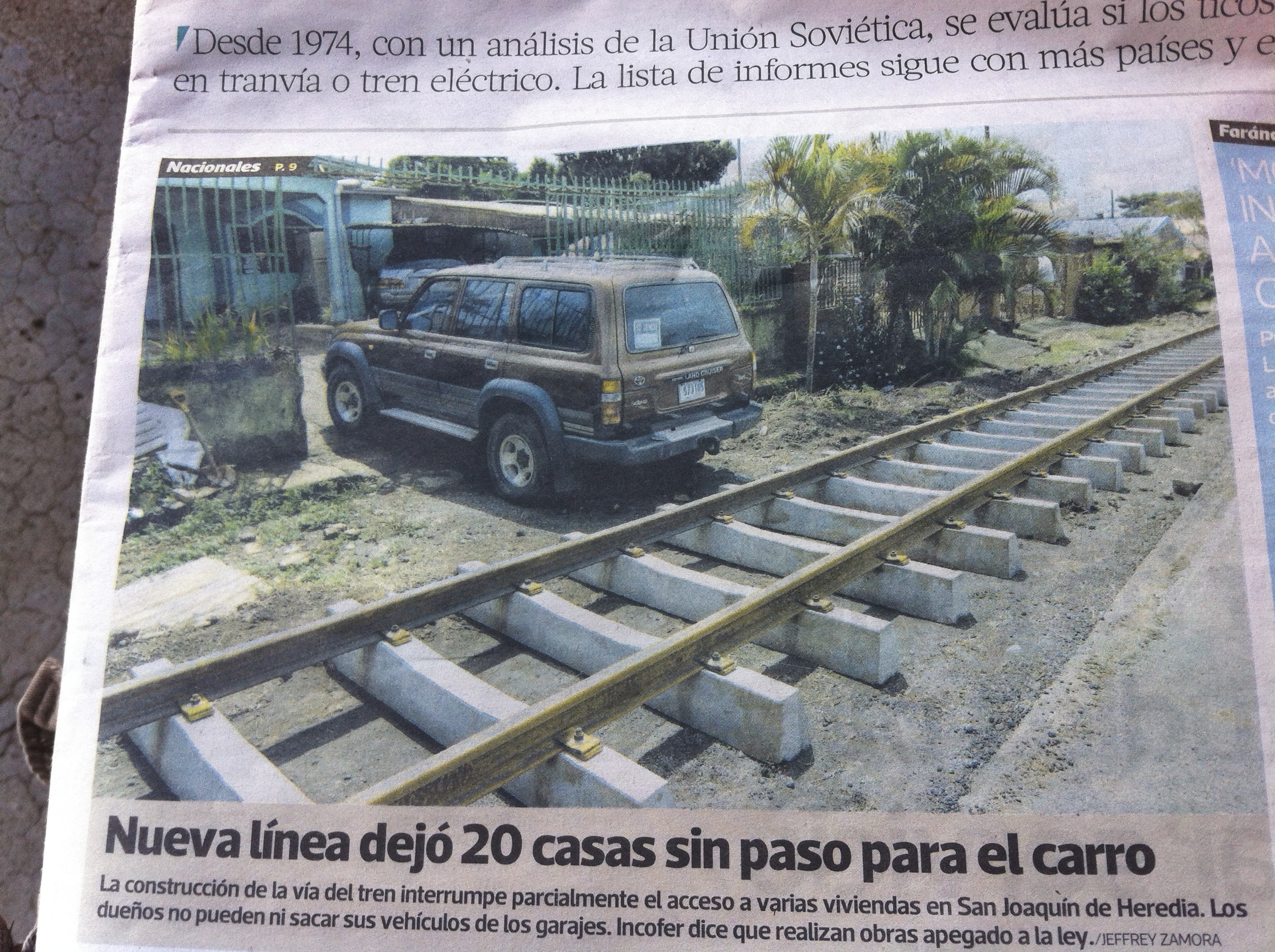
Costa Rica Train FAIL

Here is one way to get more cars off the road.  Just force everyone to take the train by blocking their driveways.

IMG_1311I just had to read the article and here were some of the highlights:

– Government claims that they are operating within the right a way.

– Project planning took 40 years to complete.

-40 million US dollars were spent just on studies and planning costs.  In other words they spent 40 million before even putting a shovel in the ground.

I think maybe they’re lacking just a little common sense…

One of these days I’ll be rich at the beach

Note: This post was originally written/published in September 2014.
There seem to be countless opportunities in Costa Rica. Everything seems possible whether starting a business, taking a vacation, doing a cultural exchange, or volunteering

Dream come true?
Dream come true?

there is always being talked about.
There isn’t a week where there isn’t something like that to keep me up thinking at night. Most ideas never get much past the sketch on a napkin stage, but nevertheless the possibilities are endless.
Recently I was stuck on the idea that I had to invest at the beach. Something about having nothing but the deep blue ocean in front of you and nothing but a plush rainforest behind you, waking up each day with a walk to the beach and a dip in the pool, pina colada in hand, seemed like paradise to me.
I was certain Costa Rica Frika 2 would open sooner or later at the beach. I just had to make sure this wasn’t a phase like Power Rangers or Pokemon was as a kid growing up. So like all good investors do, I scouted it.
I had been to this particular beach before for two to three days at a time, but I still felt like a tourist every time I arrived there. I just hadn’t been able to find a property that fit what I was looking for.
Until this time. It was a small apartment complex situated on top of a mountain with a direct ocean view a few minutes walking from town.
This was right up my alley, and from the pictures on the Internet and having direct contact with the owner when I made the reservation, I knew this could be potentially a very good visit.
Lucky for me though I was only staying as a guest, and not as an owner. Because it wasn’t anything like what I had expected.
Marketing is really an amazing tool. Done well, you can dress up just about anything to look and sound like the Taj Mahal. Fortunately, this wasn’t my dream Costa Rican vacation, because the only thing I dreamed about during my stay there was how much better this place could be with some substantial investment.
The website didn’t lie; you can definitely see the ocean, and the property borders a private wildlife reserve in which we were able to see howler monkeys playing in the trees the first day we arrived. The pool was even nice and well-kept.
That is about where the pleasantries ended.
Even when lounging at the pool, I couldn’t help but notice the overgrown grass, the plants growing wildly out of control, and dirt caked on the sidewalk, having eroded from the last night’s rainstorm. As I turned to look back at the apartment building, I noticed that some of the units appeared to have been under construction at some point but had been abandoned. I also observed that there had once been three floors to the building and there was now a makeshift roof over the concrete floor on the second.
And the whole place looked like it could use a paint job, as the salt and humidity in the air had had its way with the apartment complex.
I felt blessed to have only prepaid for one night, instead of the three I’d planned on. We arrived to find the advertised wi-fi didn’t work, the water might not work and we couldn’t unlock our room safe after we had locked our valuables inside it.
At least we had the pool while we waited for the locksmith.
I’m sure some people would have turned around and left at this point, and not too long ago I would have done the same myself. This is obviously how all disaster vacations begin, right?
But maybe since I came with an investor’s mindset, the only feeling I could strongly identify with at that point was pity. I felt bad for the owner.
I knew he didn’t intentionally not mow the grass or maintain the garden and that it wouldn’t be cheap to run the must-have wi-fi signal all the way up the hill to the apartments.
And so the longer I sat at the pool the more I felt sorry for this guy. Maybe he had come to Costa Rica with big illusions of developing a great tourism business but for one reason or another things haven’t quite worked out. If I had to guess, he probably underestimated the amount of money it would take to renovate and maintain a place like this.
My wife and I speculated it would cost maybe a half-million dollars to bring this up to dream-level vacation standards. We’re not quite at that level of investment (read: nowhere

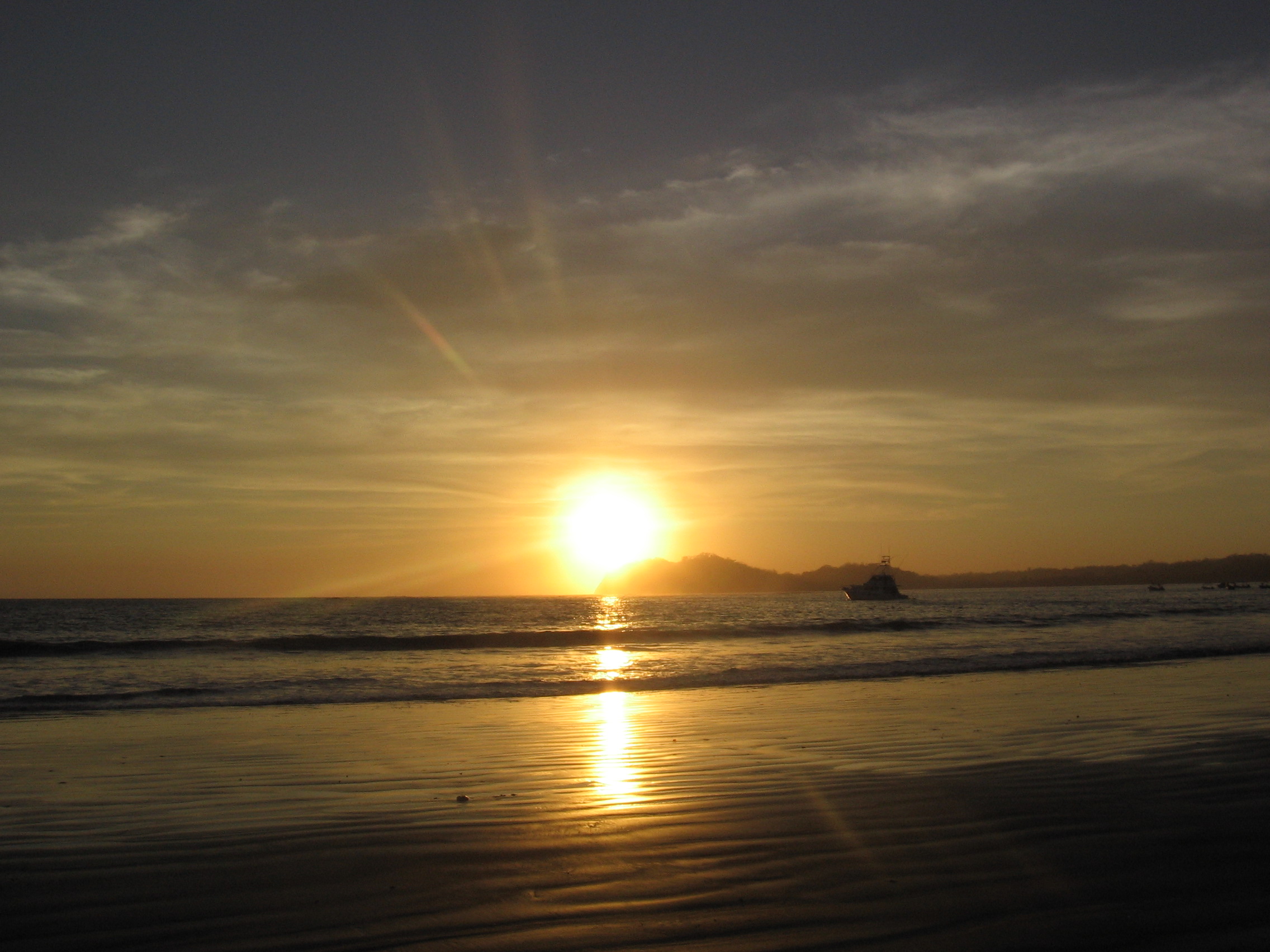
Sunsetting on my beach dream :(
Sunsetting on my beach dream 😦

near), but we did spend some time at the pool thinking of what could be done to this place.
In the end we were reminded of a common Costa Rica phrase “Cuando sea grande…” It means “When I’m a grown-up…”
That’s the phrase that’s often used when talking about things that you don’t believe you will ever do. This was a humbling experience for me, as I realized beach ownership isn’t quite what it’s all cracked up to be.
I stayed my few nights, but then I was on my way… on to the next opportunity.

Open-ended Experience Trumps the All-Inclusive

A little more than a week ago, I married the girl of my dreams and soon I found myself in Panama City, lounging next to her at the pool, sipping mojitos and working on my tan.

I could smell the sirloin steak coming from the kitchen; it will be my dinner in a few hours. After that, perhaps I’ll go down to the casino or ask the concierge for a good nightclub to go to.

There is no doubt in my mind that it will be a classy night. After all, Donald Trump has a building named after him in this city.

Three days later, back in my home in neighboring Costa Rica, I counted all the luxury hotels, five-course meals, room services, and $10 drinks and wondered if I had made a mistake. No, Mom, don’t panic… I definitely married the girl of my dreams, but our honeymoon was totally out of character.

IMG_0378
Ahhh Panama City

It was the height of luxury, but we didn’t learn anything about the culture or the country. We never ate the regional food. We didn’t wander off into residential neighborhoods. Besides my wife’s innocent chatter with the taxi driver about why people don’t swim in the ocean (it’s contaminated), we hardly spoke to the locals.

Instead, we spent a lot of time in shopping malls and nice restaurants, and without a friend to show us the ropes, we felt fairly restricted to the superficial tourist area. In effect, we treated ourselves to the all-inclusive package, yet it was probably the most exclusive thing either of us had ever done.

My honeymoon reminded me of why I chose to live in Costa Rica: so I could continue to relive and share the experience of authentic travel that swept me off my feet so many years ago.

Most of us know the joy of experiencing a baby’s firsts: first words, first steps, first tooth, etc. Well, what if I told you that I get to live that euphoria of firsts every single day with people of all ages?

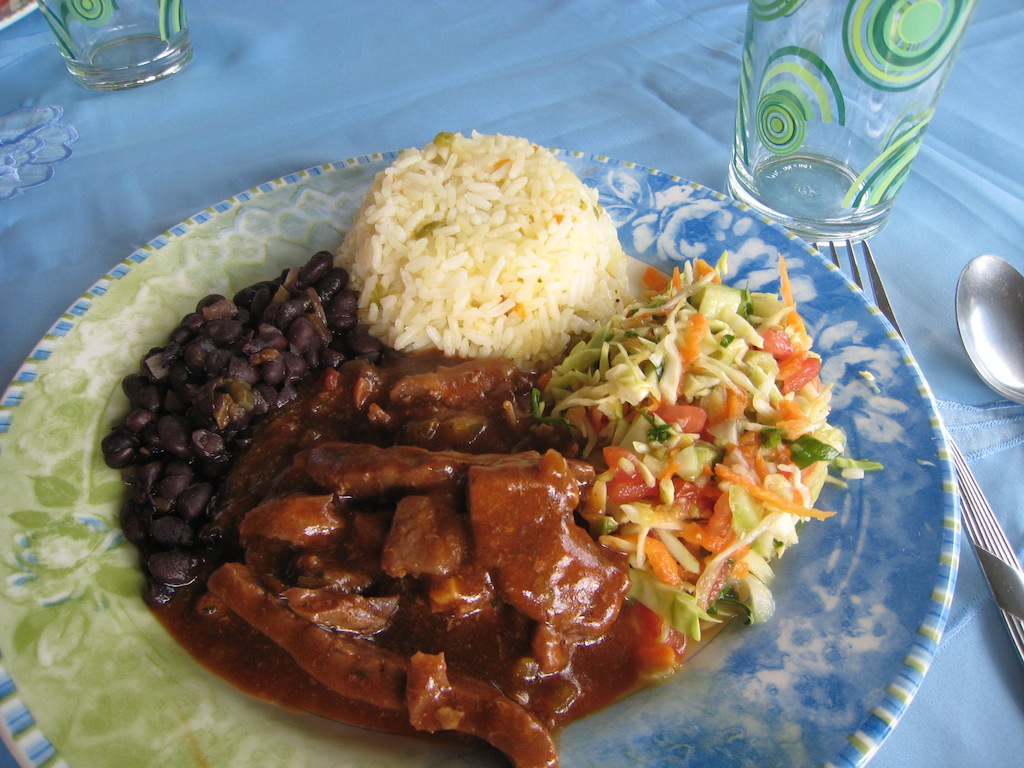
Almuerzo por Don Miguel
Mmm casado…

I have seen a 50-year old’s first words in Spanish, a 12-year old’s first gallo pinto breakfast and countless others’ first realization that the world of Latin America is not half as scary as people think it is. People here are quick on the smile, generous with laughs and eager to help – and real travel has nothing to do with nightclubs and luxury hotels.

Every once in a while, this constant, privileged euphoria slowly gets lost in my day-to-day routine until a special group comes along and gives me another injection. Last January, in fact, I came dangerously close to an overdose.

First, a group of University of Minnesota students came down for two weeks during their winter break. I didn’t really begin to understand the depth and impact of their experience until the final night, when their professor proceeded to give a 15-minute bilingual speech in a pizza parlor – and he is not bilingual – where he reflected on his experience and expressed his gratitude to all of the Costa Ricans.

A few days later, I received an email from this professor with a link to his 38-page journal that he had been  keeping since he arrived. It was complete with pictures, diagrams, and reactions – practically ready for publishing.  It wasn’t just about good food and comfortable beds, but rather a cultural immersion in Costa Rica had inspired him in many new ways. It reminded me of why I am here.  Then, my extended family flew down for an exciting week of adventure that culminated in my wedding day.

Every day was filled with an amazing energy to share and to embrace different cultures. Every effort was made so the events took place in both languages, and when communication broke down, people got creative. (Well, not so creative; we just uncorked more wine!)

I got to watch my family’s first attempts at dancing salsa and cumbia, first cracks at Spanish pronunciation, and unfortunately, first exposures to extreme sun. People were eager to organize, record and document every aspect of their newfound Latin American family, and our Costa Rican counterparts were delighted to share and learn, as well.

Many notebooks were filled with memories, countless photos were taken, and everyone agreed that whatever just happened was a blurry, amazing, heartfelt, unforgettable experience.

It’s sometimes hard for me to fathom how what I consider to be my daily life now is the experience of a lifetime for others.

I do remember that feeling some eight years ago though, and it still comes back to me on occasion: the insatiable curiosity, the sense of adventure, the relaxed pace of life, how the tropical climate is different and intoxicating when you come from a fast-paced, extreme-driven society.  Even though that seems so long ago for me, it is good to have that reminder of where I started.

My trip to Panama ended up being a refreshing experience, as it reminded me of what I’ve got. At this point, I don’t see myself trading in the open-ended for the all-inclusive anytime soon.